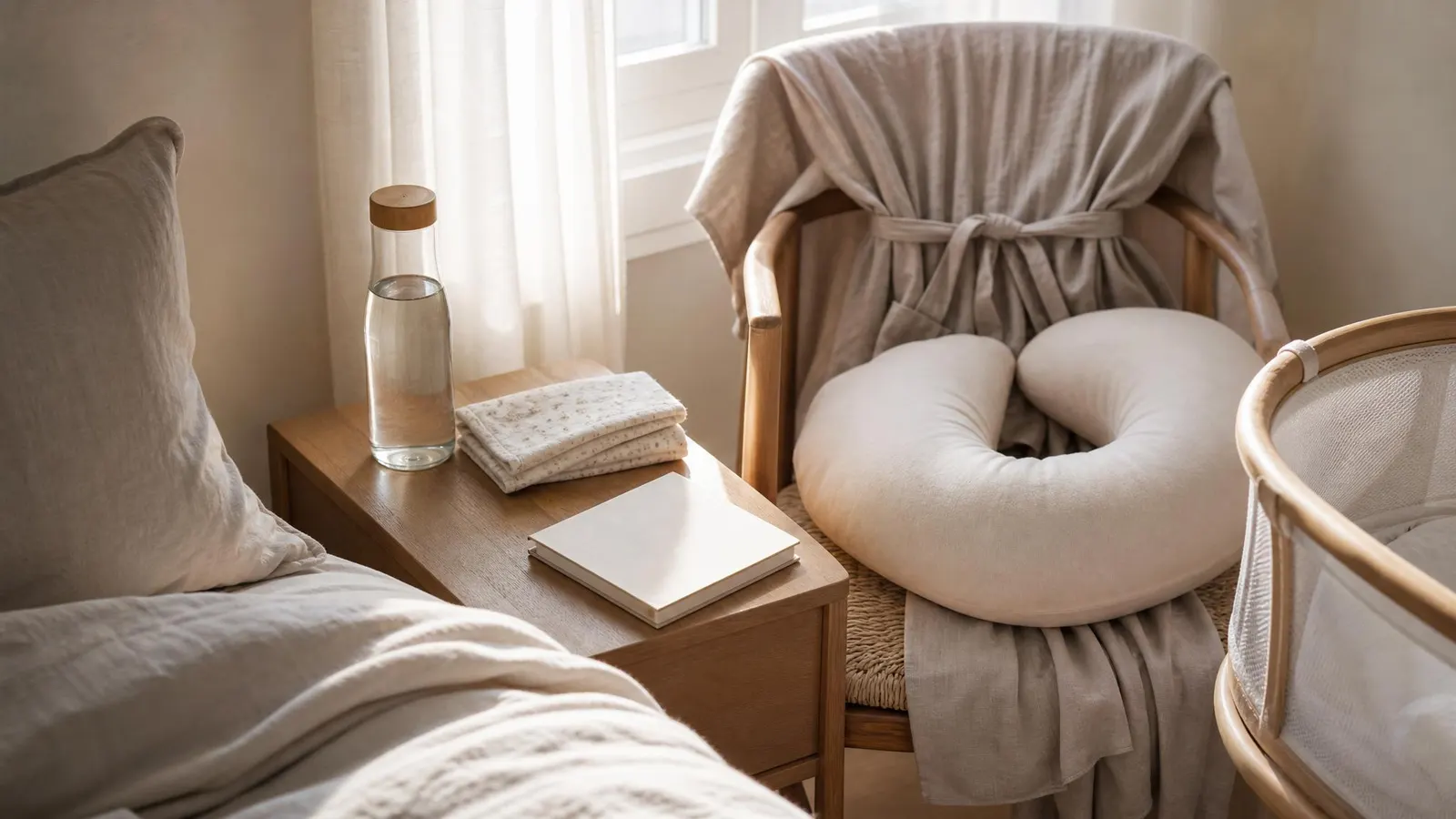
In the haze of the first two weeks postpartum, every trip across the room feels like a small expedition. You will sit down to nurse and immediately realize: water is in the kitchen, your snack is in the bedroom, the burp cloths are in the laundry basket downstairs, and the remote is wherever you last fell asleep. A postpartum recovery station is the simple, boring fix for this — and it's the kind of thing nobody tells you to set up before baby arrives, when you actually have the energy to do it.
This post contains affiliate links. We may earn a small commission at no extra cost to you. TL;DR: Build two postpartum recovery stations before baby comes — one in the bedroom, one in the main living space. Each needs water, snacks, postpartum pads, peri bottle, nipple cream, burp cloths, phone charger, and a few comfort items within arm's reach of where you'll sit. Total cost: under $50 if you already have a side table or basket. The win isn't the products — it's not having to stand up.This checklist is built from what real moms (including ours) actually reached for in the first two weeks, not what gets photographed on Instagram.
Why a Recovery Station Beats a Big Postpartum Kit
A lot of pregnancy prep advice tells you to assemble a giant "postpartum kit" — one massive basket holding everything you might need. The problem: when you're sitting on the couch nursing for the fourth time tonight, the basket is across the room. The point of a station is location. You build it where you'll actually be.
For most moms, that's two places: the bed and the main couch or recliner. If you live in a multi-story home, add a third on whichever floor you'll be on least, so you don't have to choose between climbing stairs and going without.
For more on what the first two weeks actually feel like, see our fourth trimester survival guide.
The Core Station Checklist
These are the items every station needs, ranked roughly by how often you'll reach for each.
1. Water — bigger than you think
A 32oz insulated tumbler with a straw. Not a regular water bottle. Not a glass. A straw cup, because you'll be feeding a baby with one hand and trying to drink with the other for the next eight months. The Stanley Quencher 40oz became a postpartum cliche for a reason — the volume, the straw, the handle. Buy two so one's always clean.
2. Snacks within reach
Not in the kitchen. Within reach. Granola bars, trail mix, a few squeeze pouches of fruit, dried mango, oatmeal cookies. Cluster-feeding hunger is a real, slightly unhinged hunger. Pre-load each station with a few days' worth of snacks in a small basket. Restock during diaper changes.
3. Postpartum pads and peri bottle
Keep extras of the heavy-flow postpartum pads at each station, plus a peri bottle (filled). The Frida Mom peri bottle is the angled one everyone recommends — for good reason, it actually reaches without contorting.
If you've had a C-section, see our C-section recovery timeline for additional must-haves at the station (extra pillows for support, easy-on robe, etc.).
4. Nipple cream + a small towel
Lanolin or a clean-ingredient nipple butter at each station. You will not want to walk to find it at 3am. A small soft towel for after — washcloths work fine.
5. Burp cloths — a stack of 5 per station
This is the single most-underestimated item. You will go through more burp cloths than you think possible. Five at each station means you never have to get up because the one you had is now unusable.
6. Phone charger (and a long cable)
A 6-foot cable, plugged in where you sit. Trying to nurse while tethered to a 3-foot cable is the kind of small misery that adds up. Get a long braided USB-C cable — they last longer than the cheap ones.
7. A small notebook + pen, or a notes app shortcut
For feed times, dirty diaper counts, and the small questions you'll want to ask the pediatrician next visit. The first few weeks blur badly; brief notes save you later. Some moms prefer the notebook precisely because it's not their phone.
8. Pain relief
Whatever your provider okayed — usually rotating Tylenol and ibuprofen on a schedule for the first week. Have it at the station with a small alarm or calendar on your phone for timing. Don't skip doses because you forgot to stand up.
9. A soft blanket and one extra pillow
Your body's thermostat is unpredictable postpartum, and supporting a feeding baby for 45 minutes is hard on shoulders that aren't propped. A nursing pillow lives at the station; a small extra throw is for the random cold sweats.
Niceties That Earn Their Keep
These aren't essentials, but moms who add them rarely regret it:
- A small lamp on a dimmer or smart plug. 3am feeds without overhead lights are gentler on you and baby. Pair with a smart plug so you can voice-control it without moving.
- Lip balm. Postpartum dehydration plus mouth-breathing through cluster feeds = chapped lips you won't expect.
- Hair tie or two. Stationed, not in the bathroom.
- A book or kindle. You may not feel like reading in week one. By week three, the option becomes a small mental lifeline.
- A pump and pumping accessories (if pumping) — see our pumping at work post for the broader pumping stack; even at home, having flanges and a clean bottle at the station saves a kitchen trip.
What Goes in the Bedroom Station vs. the Living Room Station
A few items deserve to be in one but not both.
Bedroom station extras:- A small flashlight or salt lamp for night feeds.
- A nightgown spare within reach (postpartum night sweats are real).
- Earplugs (for partner sleep windows when you can hand off and rest).
- Television remote (yes, list it explicitly — it gets lost).
- A larger snack basket — daytime cluster feeds eat more food than night feeds.
- A few baby items: extra burp cloths, a swaddle blanket, pacifiers if you're using them.
If you're co-sleeping in a bedside bassinet the bedroom station should sit on whichever side you nurse from. The kid lives in the bassinet; the gear lives on the table next to it.
When to Set This Up
Around 36 weeks. Two reasons. First, baby can come any time after that and you don't want to be assembling baskets in early labor. Second, your nesting energy is real and useful; channel it into something that pays off, instead of cleaning grout (which, again, you do not need to do).
Block out an hour. Walk through your home. Sit in each spot you'll be in often. Put yourself in the position of "I just sat down with a tiny baby, what would I want within an arm's reach?" That's the inventory.
For a broader prep list see our hospital bag checklist and newborn essentials minimalist guide.
What I'd Skip
A few things that get marketed for postpartum but don't earn the counter space:
- Postpartum tea sampler boxes. A nice gift, but most moms don't love them mid-recovery. One can of regular ginger tea is plenty.
- Belly binders bought before baby comes. Wait until your provider clears one and you know your body — sizes vary wildly post-birth.
- Aromatherapy diffusers in a recovery space. Many newborns are sensitive; clean air is enough.
- Specialty postpartum subscription boxes. Expensive, and the curated selection often doesn't match your actual needs.
FAQ
Q: How long do I actually need the recovery station?Most moms scale back significantly around weeks 4–6. The pads station fades first, the snacks and water stations stick around for months. By month three you'll naturally consolidate.
Q: Can I just have one big basket I move around?You can, but you won't. Energy will be too low to move a heavy basket from room to room. Two cheap stations beat one elaborate mobile one.
Q: What if I'm having a C-section?Add a small step stool for getting in and out of bed without ab engagement, a body pillow for splinting when coughing or laughing, and high-waisted disposable underwear. See our C-section recovery timeline for the broader prep.
Q: I'm a second-time mom. Do I still need this?Arguably more — because a toddler is now trying to climb on you while you nurse. The station saves you from getting up while a tiny person is asleep on you. Veterans tend to over-prep stations the second time precisely because they remember.
Q: Anything I should keep out of the station?Anything that triggers comparison or guilt — perfectly curated mom influencer books, judgmental baby manuals, the breast pump if you're not pumping yet. Keep the station physically and emotionally light.
---
The postpartum recovery station is the small piece of prep that quietly determines whether your first two weeks feel like recovery or like an obstacle course. Set up two of them, stock them with the practical things, and skip the ones marketed for vibes. Your future self, halfway through a cluster feed at 2am, will thank you.