Going back to work while still breastfeeding is a lot. You're juggling meetings, emails, postpartum emotions, and a tiny human's food supply — all at once. It's a lot to hold.
This post contains affiliate links. We may earn a small commission at no extra cost to you. TL;DR: Pumping at work gets easier by week 2 or 3. Set a firm pumping schedule, communicate early with your manager, use a hands-free bra, and bring more storage bags than you think you'll need. Your supply can stay up with consistency.That said, the first few weeks back? They're chaotic. Here's what actually helps — from moms who've done this and would've loved a real guide.
Set Your Pumping Schedule Before Day One
Why timing matters more than anything
Your body works on supply and demand. When you skip or delay pumping sessions, your supply signals slow down — sometimes permanently. Before your first day back, figure out when you'll pump.
Most working moms who are exclusively pumping or mix-feeding need to pump every 2.5 to 3 hours during the workday. If your baby nurses every 3 hours, try to match that frequency at work. If you're supplementing with formula, you might have more flexibility.
Block those times in your calendar now. Not as "optional" — as actual meetings you can't move. Tell your manager ahead of time that you'll need 15-20 minutes every few hours. You don't owe details. A simple "I'm breastfeeding and need pumping breaks, federally protected" is enough.
According to the U.S. Department of Labor, employees are entitled to reasonable break time to express breast milk for up to one year after birth. Your employer must provide a private space (not a bathroom). Know your rights.
Gear That Makes the Difference
What's actually worth buying
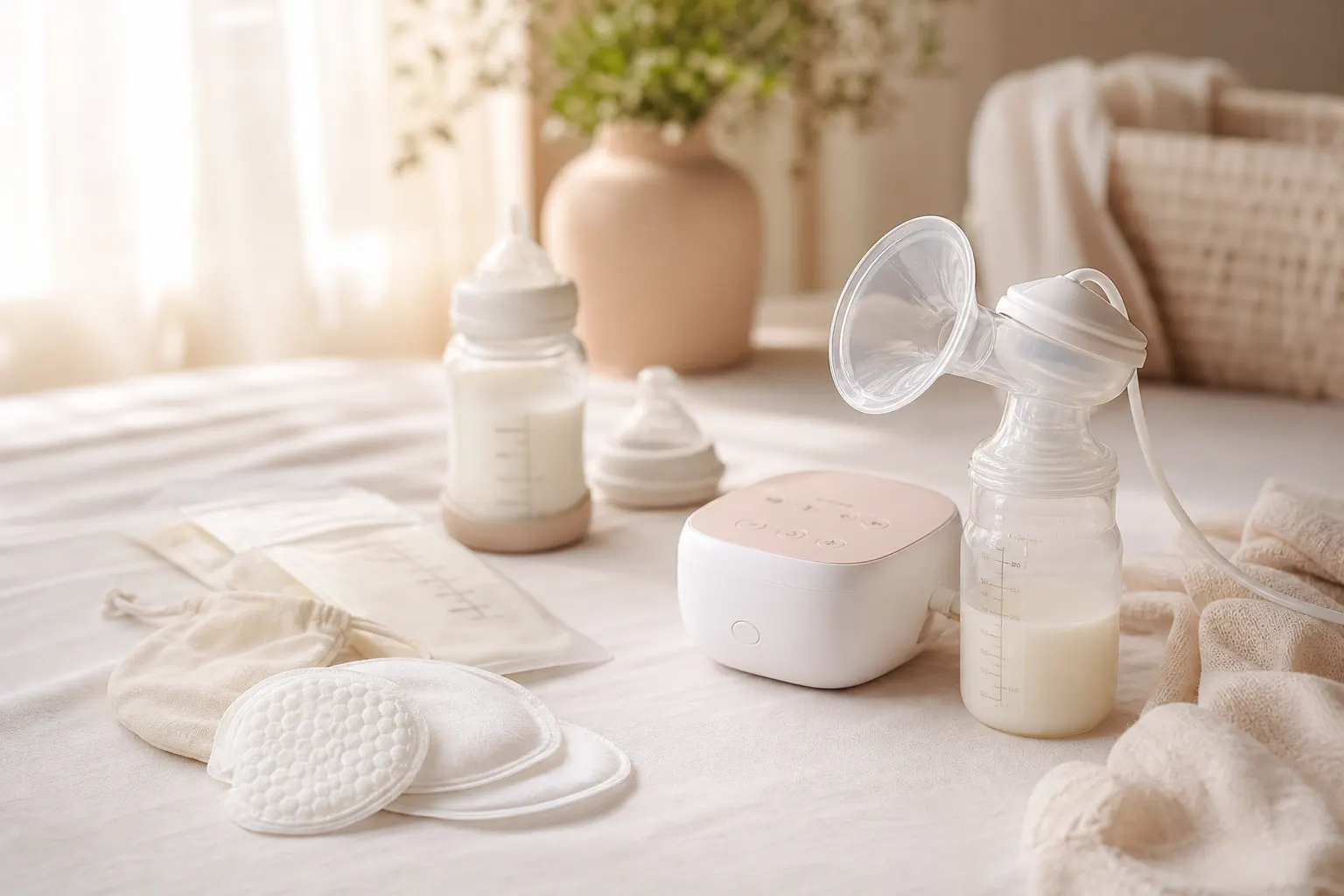
A double electric pump is the baseline. But what makes the biggest difference in a work environment is portability and hands-free capability.
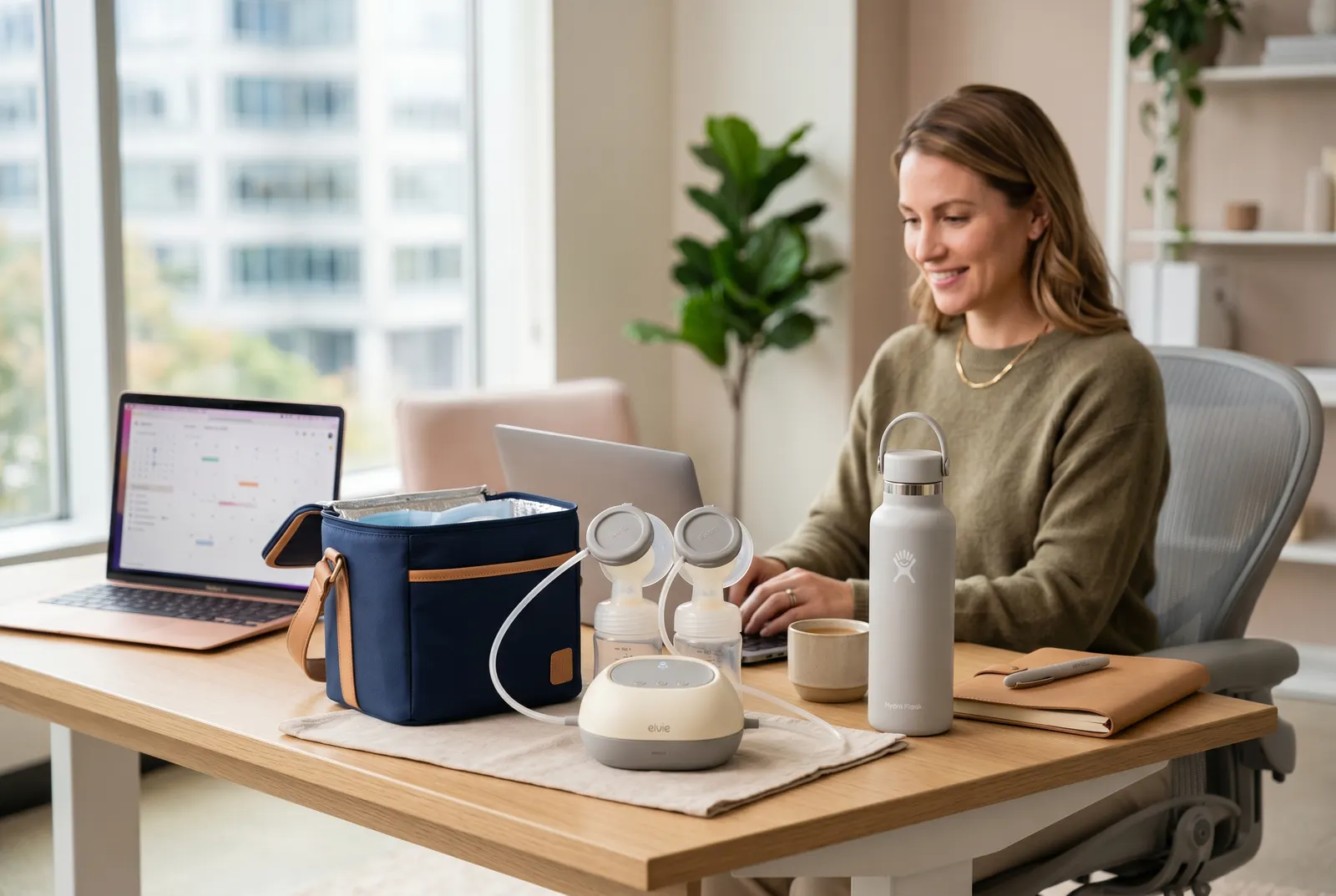
A wearable breast pump like the Elvie or Willow changed the game for a lot of working moms. You can pump during a meeting, at your desk, or on the way to the office. They're pricier, but if you're pumping for months, the sanity payoff is real.
If you're using a traditional pump, a hands-free pumping bra is non-negotiable. It lets you type, scroll, eat, drink water — anything — while you pump. Without it, you're just sitting there holding flanges for 15 minutes.
Also: keep a dedicated pump bag that stays packed. Pump, extra flanges, tubing, extra membranes (they wear out), microfiber towels, breast milk storage bags, a cooler insert. Pack it the night before, every night. Morning brain doesn't want to figure this out.
Milk Storage: Don't Wing It
Rules you actually need to know
Freshly pumped breast milk keeps at room temperature for 4 hours, in the fridge for 4 days, and in the freezer for 6 months (up to a year in a deep freezer). These aren't suggestions — they're food safety guidelines.
Label every bag with the date and ounces. Use a permanent marker. Do it right after you pump, not later when you've forgotten.
Bring a soft-sided cooler for transport. If your office fridge situation is complicated (no space, shared with coworkers who have opinions), a cooler with ice packs solves that entirely. The milk is still safe for 24 hours in a well-insulated cooler.
Get more breast milk storage bags than you think you'll use. Running out mid-week is one of the most annoying feelings. Grab the 200-count.
Keeping Your Supply Up at Work
What affects output at the office
Here's something nobody warns you about: stress tanks your output. Even if you pump on schedule, a hard meeting before your session or anxiety about being back at work can affect letdown. Your body needs to feel safe to release milk.
A few things that help:
- Look at a photo or video of your baby. This sounds cheesy but it's backed by research and it actually works. Keep one on your phone.
- Stay hydrated. You need more water than you think. A big water bottle you actually like makes a difference — something like a 40 oz insulated tumbler is easy to refill and drink from all day.
- Eat enough. Breastfeeding burns about 300-500 extra calories a day. If you skip lunch or run on coffee, you'll feel it in your output.
- Don't stress-watch the output. Some sessions yield more than others. One low session doesn't mean your supply is crashing.
It's also worth knowing: many pumping moms find that baby nurses more at night when you're back at work. This is called reverse cycling, and while it's exhausting, it's also a smart way for babies to get the milk they need. It usually balances out.
The Mental Load Nobody Mentions
Going back to work while pumping is logistically exhausting. You're planning around pump sessions, worrying about your supply, fielding comments from coworkers who notice your pump bag, and feeling guilty no matter what choice you make.
That guilt is not data. Breastfeeding as long as you're able to is great. Switching to formula is also great. Combo feeding is great. You are not failing if pumping at work doesn't last as long as you planned.
If you want more support on the breastfeeding-without-judgment front, check out our post on breastfeeding without guilt — the real talk version.
Set a goal if it helps (one month, three months, six months), but hold it loosely. Your mental health matters too.
FAQ
How often should I pump at work to maintain my supply?
Most lactation consultants recommend pumping every 2.5 to 3 hours during your workday to roughly match how often your baby feeds. That's usually 2-3 sessions in an 8-hour workday. Consistency matters more than exact timing — skipping sessions regularly is what tends to reduce supply over time.
What if my workplace doesn't have a private pumping room?
Under U.S. federal law, employers are required to provide a private space (that is not a bathroom) for nursing employees. If your company hasn't set one up, talk to HR and reference the Break Time for Nursing Mothers law. If you're running into resistance, your state may have additional protections.
Is it normal for pump output to be less than what my baby gets when nursing?
Yes — completely normal. Babies are more efficient at extracting milk than pumps. Most moms pump less than their baby actually takes when nursing. Judge your overall daily output (whether it roughly covers what your baby needs while you're apart), not individual session amounts.