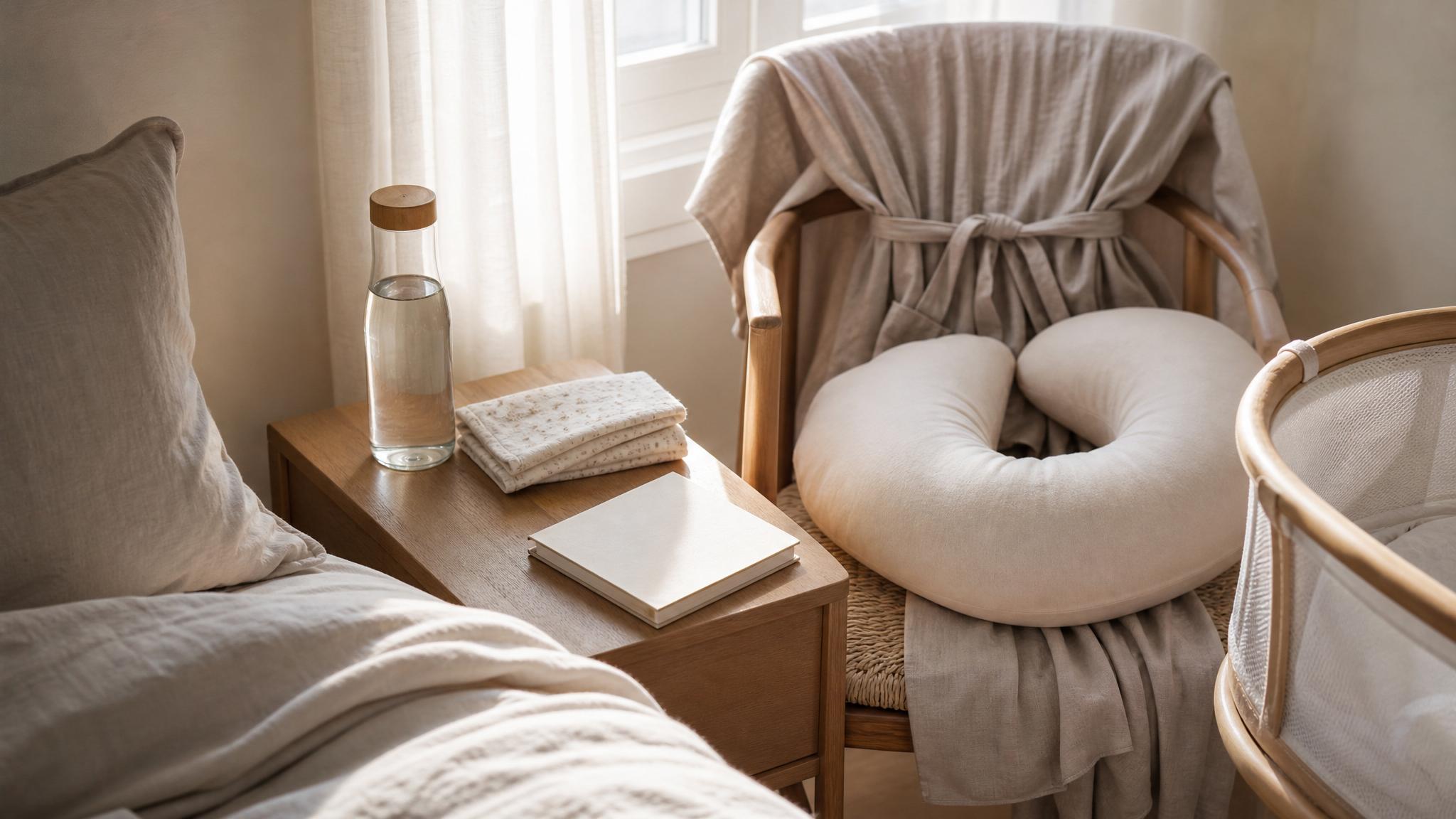
Postpartum Comfort Corner: What to Set Up Before Birth
The best postpartum comfort corner is simple: one reachable spot with water, snacks, pain relief, feeding supplies, burp cloths, chargers, and anything you need for bathroom-level recovery without standing up every ten minutes. It does not need to be pretty. It needs to be stocked, boring, and close to where you actually sit at 3 a.m.
Quick answer: Set up a postpartum comfort corner in the place you expect to feed, rest, and recover most often. Use a rolling cart, basket, or nightstand. Stock it with hydration, one-handed food, postpartum pads, nipple care, baby basics, meds approved by your provider, and a tiny trash bag system. Refill it once a day so the hard hours are less frantic.Why a Postpartum Comfort Corner Helps
The first weeks after birth are not a time for elaborate routines. You may be healing from stitches, a c-section, pelvic floor soreness, swollen breasts, night sweats, and very little sleep.
A comfort corner works because it removes tiny decisions. Instead of asking, "Where are the burp cloths?" or "Did I drink water today?" everything lives in one predictable place.
This is especially useful if you are breastfeeding, pumping, combo feeding, or contact napping. Once a newborn is settled, the last thing you want is to realize your charger or snack is across the room.
Think of it as the gentler cousin of a hospital bag. If you have not packed that yet, start with our real-mom hospital bag checklist and then build this home base for the first week back.
What to Put Within Arm's Reach
Start with a basket, caddy, or rolling nursery cart. A cart is nice because it can move from bedroom to couch, but a laundry basket works too. Do not overbuy the container. Spend your energy on the contents.
Add a large water bottle with a straw. A 40 oz insulated water bottle is popular for a reason: one-handed sipping matters when your arms are full. Add electrolyte packets if your provider says they are fine for you.
Stock one-handed snacks. Think granola bars, trail mix, crackers, dried fruit, protein bites, or shelf-stable lactation snacks if you like them. You do not need special cookies to make milk. You do need calories.
Keep a small medicine pouch for provider-approved pain relief, stool softeners, vitamins, and any prescriptions. Label it clearly, especially if another adult will help with refills.
For postpartum body care, include heavy pads, disposable underwear if you are using it, witch hazel pads, nipple cream, breast pads, hair ties, lip balm, tissues, hand sanitizer, and a small trash bag roll. If you are recovering vaginally, keep bathroom supplies in the bathroom too; do not make yourself carry everything back and forth.
For baby, add burp cloths, a few diapers, wipes, a swaddle, pacifiers if using, and a clean outfit. You are not replacing the nursery. You are preventing one tiny spit-up from becoming a whole expedition.
Set It Up for Feeding, Pumping, and Rest
If you plan to breastfeed, place the corner near your most comfortable chair, couch spot, or bed. Add a nursing pillow if it helps your body relax, but do not force it if regular pillows work better.
If you plan to pump, make a second mini-zone near the pump: clean bottles, storage bags, a marker, pump wipes if you use them, and a small cooler if walking to the fridge feels impossible overnight. The CDC has practical guidance on cleaning infant feeding items, which is worth reading before you are doing it on two hours of sleep.
If you are formula feeding, keep safe, pre-measured supplies where they make sense. Follow the instructions on your formula container and your pediatrician's guidance for water, storage, and timing.
Add comfort that is actually useful: a blanket that can be washed, a dimmable lamp, a long phone charger, headphones, and a notebook for quick notes. This is not about creating a social media-ready corner. It is about making the longest nights feel less scattered.
The Daily Refill Routine
The setup only works if it gets reset. Once a day, ask your partner, friend, or future self to refill water, snacks, diapers, wipes, burp cloths, bottles, and trash bags.
If help is available, assign the refill job clearly. "Please reset the cart every night after dinner" is better than hoping someone notices. People want to help postpartum, but they often need a specific job.
Keep a simple note taped inside the basket: water, snacks, burp cloths, diapers, wipes, meds, pads, trash.
You may also want a second comfort spot in the bathroom or bedroom. Many moms end up with one feeding corner and one recovery station. For the body-healing side, our postpartum recovery supplies guide goes deeper into what is worth having.
Skip anything that creates more work. You do not need a matching cart, labeled jars, or a dozen tiny bins unless organizing genuinely calms you. You do not need every viral postpartum product before you know what your body actually needs.
Also skip unsafe sleep items near the baby sleep space. Blankets, pillows, and loose items belong with you, not in the bassinet or crib. Keep baby's sleep area flat, firm, and clear.
The real goal is boring support. Water. Food. Clean cloths. Pain relief. A charger. A place to throw trash. That is the magic.
FAQ
When should I set up a postpartum comfort corner?
Aim for 35-37 weeks if you can. If baby comes earlier, do a bare-minimum version: water, snacks, pads, diapers, wipes, burp cloths, charger, and trash bags.
Do I need a rolling cart?
No. A rolling cart is convenient, but a basket, tote, nightstand drawer, or diaper caddy works. Use what fits your home and budget.
What if I have a c-section?
Put the corner wherever you can sit and stand with the least strain. Keep medications, water, snacks, a pillow for bracing your incision, and baby supplies close so you are not bending or climbing stairs constantly.
Related reading