Postpartum recovery supplies are not about building a fancy bathroom shrine. They are about making the first two weeks after birth less painful, less chaotic, and less likely to send you waddling through the house at 3 a.m. looking for pads.
This post contains affiliate links. We may earn a small commission at no extra cost to you. TL;DR: Set up one simple recovery basket before your due date with heavy-flow pads, peri bottles, witch hazel pads, pain relief spray, stool softener, comfortable underwear, and a big water bottle. Skip the overstuffed kits unless you like paying extra for cute packaging. You need comfort, reachability, and enough supplies for the first messy stretch.The Real Postpartum Recovery Setup
The smartest move is to build a small station in the bathroom you will use most. Put everything within arm's reach of the toilet. If you have more than one bathroom, make a smaller backup station in the second one too.
You do not need every postpartum product on the internet. You need the things that help with bleeding, swelling, stitches, bathroom fear, and hydration. The unglamorous stuff is the stuff that matters.
Start with a simple basket or bin. Add a pack of postpartum pads, disposable or washable underwear, witch hazel pads, and a peri bottle. Most hospitals send you home with some supplies, but not always enough. Having your own backup means you are not rationing mesh underwear like treasure.
For the big picture of what healing can feel like, read our honest guide to postpartum recovery truth. This checklist is the practical companion: what to put where, and what can wait.
What To Buy Before Birth
Here is the core list I would have ready by 36 weeks:
- Heavy-flow maternity pads or overnight pads
- A peri bottle with an angled spout
- Witch hazel pads
- Perineal cooling pads or instant ice packs
- Pain relief spray, if your provider says it is okay
- Comfortable high-waist underwear
- Stool softener, approved by your provider
- Ibuprofen or acetaminophen, also provider-approved
- A large water bottle
- Easy snacks for the nursing or pumping spot
The peri bottle is not optional in spirit, even if the hospital gives you one. After birth, wiping can feel impossible. A good angled peri bottle lets you rinse without twisting your body into a position it has no interest in attempting.
If you have a vaginal birth, cold packs can be wonderful for the first day or two. If you have a C-section, you may care more about high-waist underwear, stool softener, and keeping everything you need at counter height so you are not bending constantly.
What You Can Skip
You can skip the giant luxury postpartum kit if the price makes you twitch. Some are genuinely convenient, but most are just bundles of basic supplies with nicer branding.
You can also skip scented products. Your skin and stitches do not need fragrance. Choose plain, gentle, boring supplies. Boring is good here.
Do not panic-buy every cream, balm, pad, spray, and herbal soak. Start with the basics. If you need something specific after delivery, you can order it then or ask someone to pick it up. The goal is preparedness, not building a warehouse.
One thing worth considering is a donut pillow or postpartum cushion if you have tearing, hemorrhoids, or a long drive home. Some moms love them. Others find a soft regular pillow works fine. This is a comfort item, not a moral test.
Do Not Forget C-Section Recovery
Postpartum recovery advice often assumes vaginal birth, which is frustrating because C-section recovery is major abdominal surgery plus newborn care. If a C-section is planned or possible, prep for limited bending, slower stairs, and incision comfort.
High-waist underwear matters because low bands can rub the incision. A small pillow can help you brace your belly when coughing, laughing, or getting up. Keep diapers, wipes, snacks, water, and feeding supplies on the same floor where you spend most of the day.
For medical recovery guidance, the American College of Obstetricians and Gynecologists is a solid starting point, and your own provider's discharge instructions matter most. Call if bleeding suddenly gets heavier, you have a fever, pain gets worse instead of better, or something feels wrong. You are not being dramatic. You are recovering.
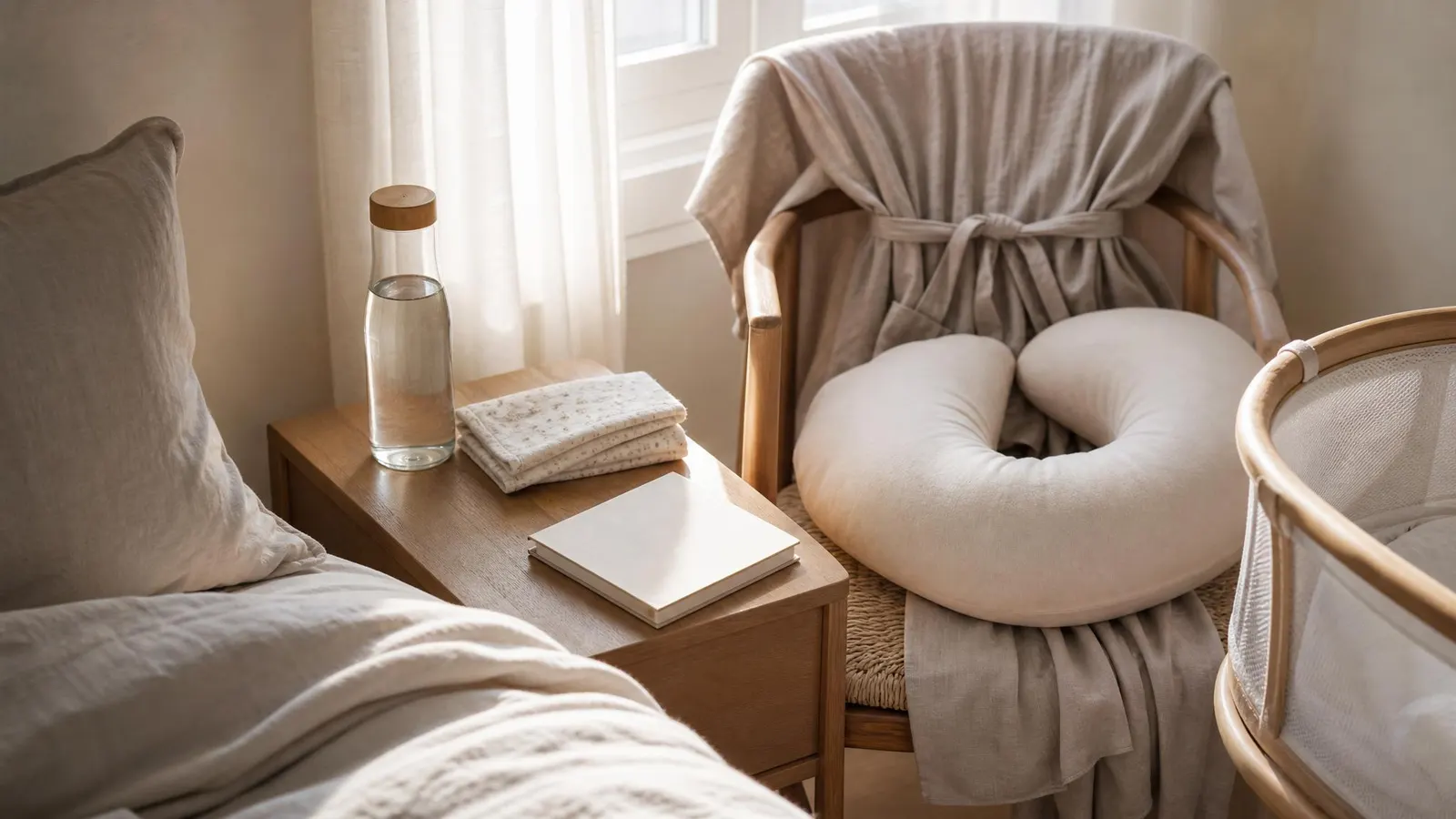
Make A Tiny Night Station
Postpartum nights are weird. You may be feeding a baby, sweating through pajamas, tracking diapers, and trying to remember when you last took pain medicine.
Put a small station near your bed or feeding chair:
- Water bottle
- One-handed snacks
- Burp cloth
- Lip balm
- Phone charger
- Nursing pads or burp cloths
- A dim light
A simple large insulated water bottle is genuinely useful, especially if you are breastfeeding or pumping. Postpartum thirst can feel ridiculous. Keep water where you sit, not across the room where it becomes someone else's problem.
FAQ
How many postpartum pads do I need?
Start with one large pack of heavy-flow or overnight pads, plus whatever the hospital sends home. Bleeding usually gets lighter over time, but the first several days can be heavy. You can always buy more once you know what your body is doing.
Are postpartum recovery kits worth it?
Sometimes, if you want convenience and the price is reasonable. But you can usually build your own kit for less by buying pads, witch hazel, peri bottles, and comfort items separately. The supplies matter more than the branding.
When should I set up postpartum supplies?
Aim for 35 to 36 weeks, earlier if you are high-risk or already feeling like birth could come soon. Future-you will not want to organize bathroom baskets while holding a newborn and wearing hospital mesh underwear.
The Bottom Line
Postpartum recovery is not a spa weekend. It is messy, tender, emotional, and temporary. A simple supply setup will not make healing effortless, but it can remove a lot of tiny frictions when you are tired and sore.
Buy the basics. Put them where you will use them. Let the rest be optional.