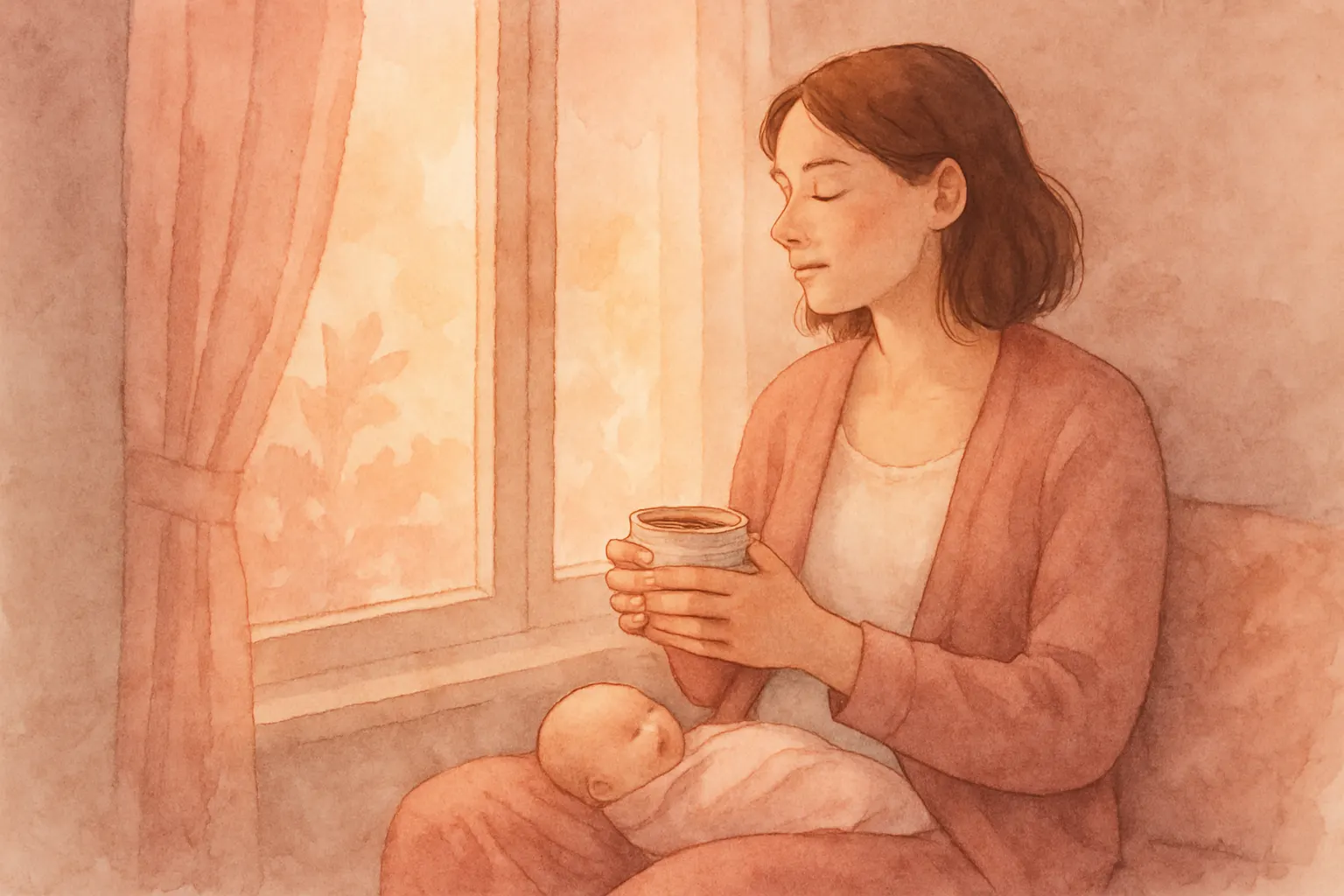
New mom anxiety in the first month can make ordinary newborn life feel like an emergency. You may check breathing over and over, replay every feeding, or feel a jolt of panic when the baby finally sleeps. Some worry is normal. Constant dread, racing thoughts, or feeling unable to rest deserves support.
This post contains affiliate links. We may earn a small commission at no extra cost to you. Quick answer: Start with the basics: sleep protection, food, fewer internet spirals, and one honest conversation with your doctor, midwife, or pediatrician. Anxiety is common after birth, but you do not have to white-knuckle it. The earlier you name it, the easier it is to build help around you.This is not about becoming a relaxed mom overnight. It is about lowering the pressure enough that you can breathe, sleep in small chunks, and trust that scary thoughts are not instructions.
What New Mom Anxiety Can Feel Like
Postpartum anxiety does not always look like panic attacks. Sometimes it looks like being the most "prepared" person in the room while your body is running on alarm mode.
Common signs include:
- Racing thoughts that will not shut off
- Checking the baby repeatedly, even when everything is fine
- Feeling unable to sleep when the baby sleeps
- Sudden panic, chest tightness, or nausea
- Fear that something terrible will happen if you look away
- Irritability, snapping, or feeling constantly on edge
- Googling symptoms until you feel worse
Some intrusive thoughts can be shocking. A scary thought does not mean you want it to happen. It means your brain is overloaded and scanning for danger. Still, if thoughts feel intense, repetitive, or frightening, tell a clinician. You deserve backup, not shame.
The American College of Obstetricians and Gynecologists recommends screening for depression and anxiety during pregnancy and after birth. Their patient guidance on postpartum depression and emotional changes is a solid starting point if you want a medical overview.
Protect One Real Sleep Stretch
Sleep deprivation makes anxiety louder. You cannot positive-think your way around a body that has not slept. The goal is not eight perfect hours. The goal is one protected stretch where another capable adult is responsible for the baby.
If you have a partner, trade shifts instead of both hovering together. One person sleeps with earplugs or a white noise machine while the other handles baby duty. A simple white noise machine can help the sleeping parent actually stay asleep.
If you are breastfeeding, the non-feeding parent can still do the diaper, soothing, burping, and resettling. If you pump or use formula, a full bottle shift may let you get a longer block.
No partner at home? Ask for a very specific sleep favor: "Can you come from 8 to 11 AM so I can sleep after the morning feed?" People often want to help but need a job.
Make the Worry Visible
Anxiety thrives in vague dread. Writing it down can make it less slippery. Keep a small notebook or notes app list with two columns:
- What my brain is saying
- What I know is true right now
Example: "The baby breathed weird once, so something is wrong" becomes "Baby is pink, feeding, waking, and has normal diapers. I can call the pediatrician if breathing changes or I see blue lips, flaring nostrils, or poor feeding."
This is not a cure. It is a speed bump between panic and the 2 AM search results page.
A basic postpartum journal can help if paper feels easier than your phone. If writing turns into rumination, stop and switch to a grounding task: drink water, put both feet on the floor, name five things you see, or step outside for one minute.
Build a Tiny Calm-Down Kit
When anxiety spikes, you do not need a full self-care routine. You need a few tools within reach.
Try keeping these in the spot where you feed or rock the baby:
- Water bottle with a straw
- Protein snack
- Lip balm
- Phone charger
- Burp cloth
- Headphones
- A short playlist or calming podcast
- A written list of who to call
An insulated straw water bottle sounds boring, but hydration and one-handed drinking matter when you are trapped under a newborn. Add snacks with protein and fat so you are not running on adrenaline and crackers.
If worry spikes during baby sleep, use a timer instead of constant checking. Set a 10-minute timer, check once, then restart. If the urge to check feels impossible to resist, that is good information to bring to your clinician.
Know When to Get More Help
You do not need to wait until things are "bad enough." Call your OB, midwife, primary care doctor, pediatrician, or a postpartum mental health therapist if anxiety is interfering with sleep, eating, bonding, or daily functioning.
Get urgent help now if you feel at risk of harming yourself or your baby, feel detached from reality, hear or see things others do not, or feel unable to stay safe. In the U.S., call or text 988 for immediate crisis support.
For related emotional changes, read our guide to baby blues vs postpartum depression. Anxiety can overlap with both, and it is worth having language for what is happening.
FAQ
Is new mom anxiety normal in the first month?
Some worry is normal because newborn care is intense and unfamiliar. Anxiety needs support when it feels constant, keeps you from sleeping, causes panic symptoms, or makes normal baby care feel impossible.
Will postpartum anxiety go away on its own?
Sometimes it eases as sleep improves and routines settle. But you do not have to wait and see. Therapy, support groups, medication when appropriate, sleep shifts, and practical help can make recovery faster and less lonely.
What should my partner do when I am anxious?
Take over concrete tasks instead of saying "just relax." Wash bottles, handle a diaper change, sit awake during a sleep shift, bring food, or call the doctor with you. Calm gets easier when someone else is carrying part of the load.
The Bottom Line
New mom anxiety in the first month is common, but common does not mean harmless or something you should hide. Start small: protect one sleep stretch, eat something steady, stop the search spiral, and tell one safe person the truth.
You are not failing because your nervous system is loud. You are healing, learning a new baby, and doing one of the most demanding transitions a body can do. Support is not extra. It is part of the plan.