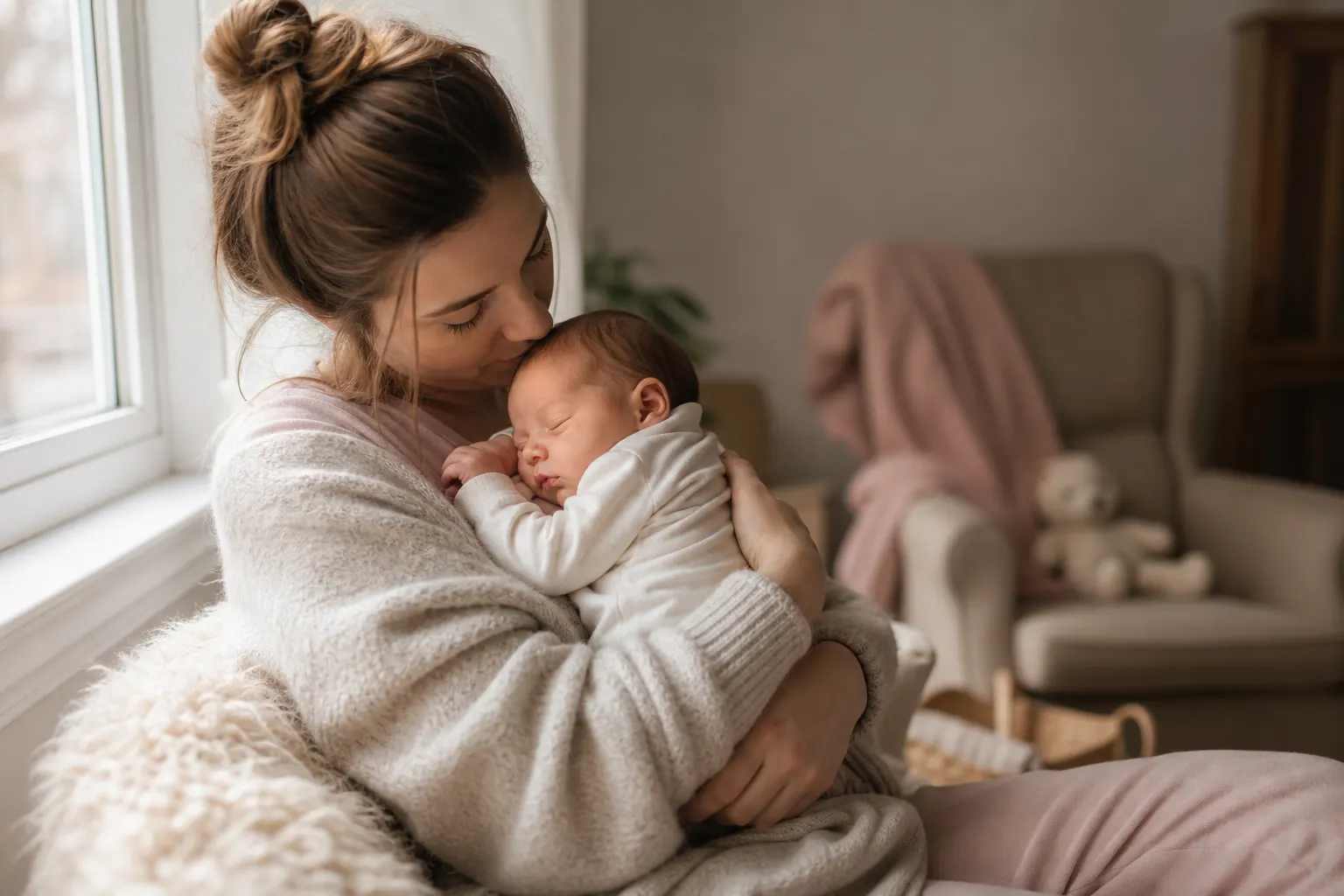
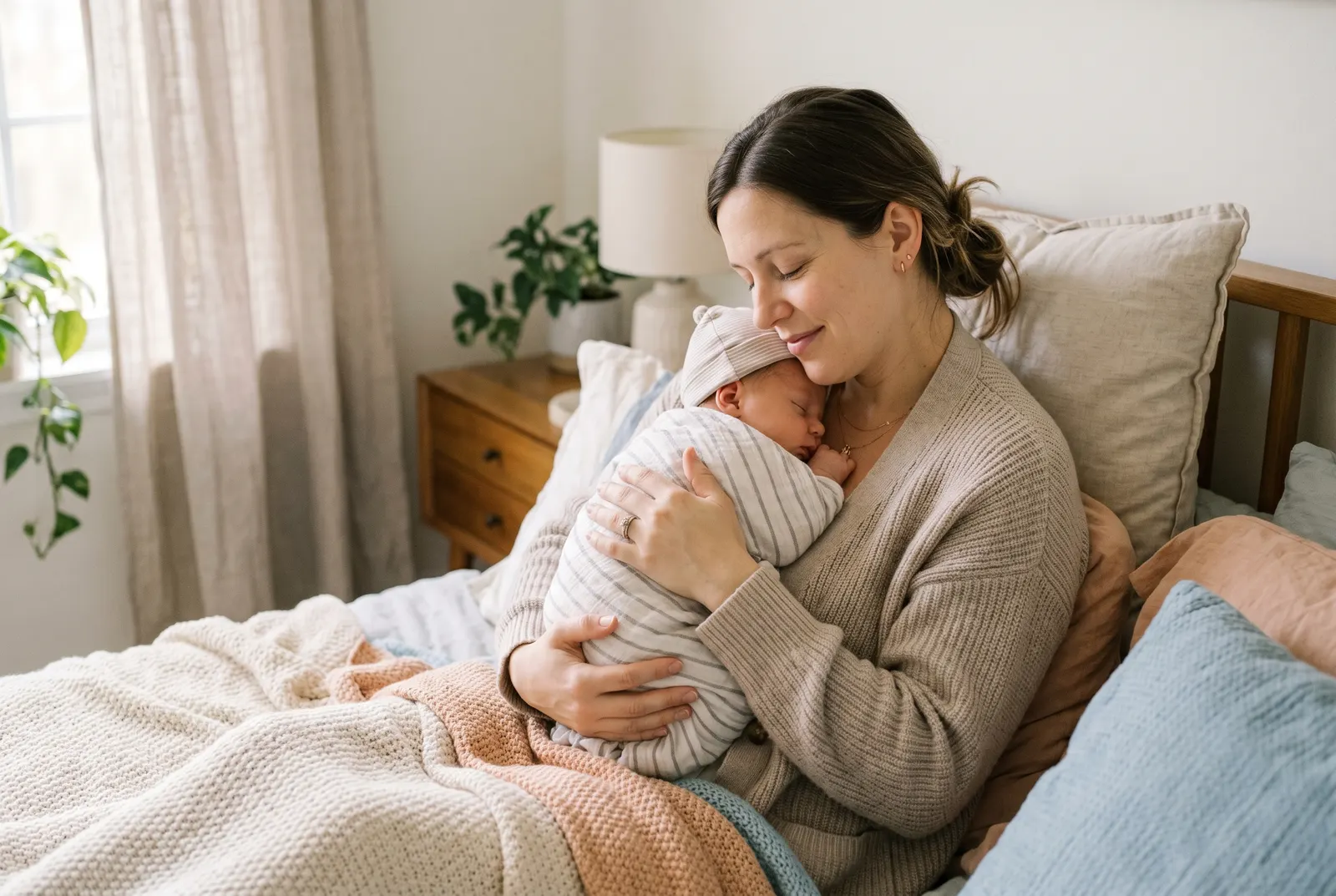
Someone at your baby shower probably said it. Maybe your mom. Maybe a card. It takes a village.
And you nodded, because it sounds true. What they didn't tell you is that you might arrive home from the hospital with a newborn and realize you have no idea where your village is, or whether you have one at all.
That gap between the saying and the reality is one of the least-talked-about hard parts of new motherhood. And it is genuinely hard.
Quick answer: Mom loneliness is extremely common and not a reflection of how likeable you are or how good your friendships were before baby. Your social world has shifted seismically. Building a new village takes intentional effort, low-stakes repetition, and giving yourself time to find the people who actually get it. You can do this — even if you're exhausted, even if you're an introvert, even if you've moved cities, even if it's week two.Why New Motherhood Gets So Lonely
Your Old Life Doesn't Fit Anymore
Pre-baby friendships often run on availability — spontaneous plans, late dinners, weekends away. When you have a newborn, and then a baby, and then a toddler, that whole infrastructure disappears overnight.
Friends who don't have kids don't know what to say or do. They text "let me know if you need anything!" with genuine warmth, but you never text back because you don't know what you need, and anyway it requires energy you don't have. The connection quietly atrophies. That's not a failure of friendship. It's a misalignment of life stages.
Friends who do have kids are often at a different stage — older children, more independence, already embedded in their own routines. Trying to sync up is like two ships passing in different time zones.
So you end up in this strange in-between: loved, technically, by people who genuinely care about you — and still profoundly alone.
The Hormones Don't Help
In the postpartum period, your brain is in a particularly vulnerable state for social isolation. Oxytocin — the hormone that drives bonding and connection — is surging in response to your baby. Your nervous system is tuned to hyper-attunement for your child.
But that same heightened sensitivity makes the absence of social warmth feel sharper. You're running threat detection 24 hours a day. Loneliness in that state doesn't feel like a mild inconvenience. It feels like something is wrong.
According to research published by the Campaign to End Loneliness, new mothers are one of the most consistently lonely demographic groups — more than the elderly, more than people living alone. That number is not reflecting your personal failure. It's reflecting a structural gap in how we support new parents.
What You Actually Need (And It's Not a Casserole Drop-off)
Meals are nice. But what most new moms are starving for is something different: people who will sit with them in the mess. Who don't need the house to be clean. Who won't say "sleep when the baby sleeps" as if that's advice. Who will just be present without agenda.
That kind of connection is harder to ask for — which is exactly why you have to go find it rather than wait for it to show up.
Finding People Who Get It
The most reliable shortcut to not feeling alone is finding people who are exactly where you are — sleep-deprived, covered in something unidentifiable, genuinely uncertain about everything, trying hard anyway.
Here's where to look:
Postpartum or new parent groups. Hospitals and birth centers often run these in the weeks after delivery. Many are free. They are not always life-changing, but they put you in a room with other people in the same fog, and sometimes that's exactly what matters. Ask your OB, midwife, or pediatrician's office what they know about. Local mom Facebook groups. Deeply unsexy, genuinely useful. Search your city or neighborhood name plus "moms" or "parents." These groups are where people post about which pediatricians they like, ask about local classes, and — if you're lucky — plan meet-ups. Real humans, real proximity. Baby and toddler classes. Library story times, baby yoga, music classes, swim lessons. Yes, the classes are for the baby. But the real value is showing up to the same place at the same time each week and making small talk that slowly becomes less small. Relationships form through repetition, not intensity. You don't need one perfect deep conversation — you need ten ordinary ones. Apps like Peanut. Peanut is essentially a friend-making app specifically for mothers. You create a profile, match with nearby moms at similar stages, chat, and eventually meet in person. It sounds awkward and sometimes it is. It also genuinely works for a lot of women, particularly those who've moved to a new city or whose pre-baby social network was at work.The Part Nobody Likes to Hear
Making new friends as an adult — as a tired, identity-shaken adult with a baby attached to you — is uncomfortable and slow.
You will show up to a story time and not click with anyone. You will try a mom group once and find the vibe weird. You will match with someone on Peanut and the conversation will fizzle. That's not evidence that you should stop. That's just what the process looks like.
The research on adult friendship is pretty consistent: connection forms through unplanned interaction over time, not through single intentional efforts. The Atlantic covered this well — proximity and repetition are the two main ingredients. Which means the goal isn't to find your people in one shot. It's to keep showing up to the same places until the familiarity builds into something real.
Lower the Bar for What "Counts"
In this season, a village doesn't have to mean lifelong best friends who know your whole story.
It can be the woman you text memes to while you're both up at 3 AM. The neighbor who waves when you're walking with the stroller. The group chat where everyone's baby is the same age and you compare notes on sleep regressions. The pediatric nurse who actually answers your questions. These small threads of connection matter. They are not a consolation prize for real friendship — they are the fabric of a support network.
Ask for the Specific Thing
"Let me know if you need anything" is almost impossible to respond to. But "Can you come sit with me for an hour on Thursday while I figure out why the baby won't nap" is a real ask that people can actually answer.
People who love you want to help. They often don't know how. Give them something concrete and small, and let them do it. That's how reciprocity gets built. That's how the village actually forms — one specific, honest ask at a time.
On the Days It Still Feels Like Too Much
Even when you've started building community, there will be days — usually the hardest days — when it still feels like you're doing this alone. Those days are not evidence you haven't made progress. They're just hard days.
If the loneliness feels persistent and consuming, if it's paired with feeling disconnected from your baby or like nothing will get better — that's worth talking to your doctor about. Loneliness at that level can be a symptom of postpartum depression or anxiety, not just circumstance. We covered the signs in our post on new mom mental health — it's worth a read.
But for the loneliness that's real and painful and ordinary? You're not broken. You're in one of the most disorienting transitions a person goes through, and you're doing it without the built-in community structures that used to surround new parents.
The village isn't waiting fully formed. You build it, slowly, one awkward hello at a time. And you're already doing the hardest part.
---
FAQ
Is it normal to feel lonely even when I'm surrounded by people?
Yes. Loneliness isn't about the number of people around you — it's about feeling seen and understood. You can be with your baby all day, talk to your partner all evening, and still feel profoundly alone if you don't have connection with people who understand what you're going through. That's a specific kind of isolation that new parenthood creates, and it's very common.
My friends don't have kids yet. Is it worth trying to keep those friendships?
Absolutely, but expect the shape to change. These friendships may need more explicit tending and more grace for the mismatch in availability and context. Some will survive the transition beautifully; some will naturally fade. Neither outcome is a failure. Meanwhile, building connections with other parents doesn't replace old friendships — it fills a different need.
How long does the isolation phase usually last?
It varies enormously, but most mothers report that isolation peaks in the first 6-9 months and begins to ease as baby's schedule becomes more predictable and they get out more. The active work of building a new social world tends to pay off around the one-year mark. If it isn't improving at all, that's worth discussing with a professional.
---