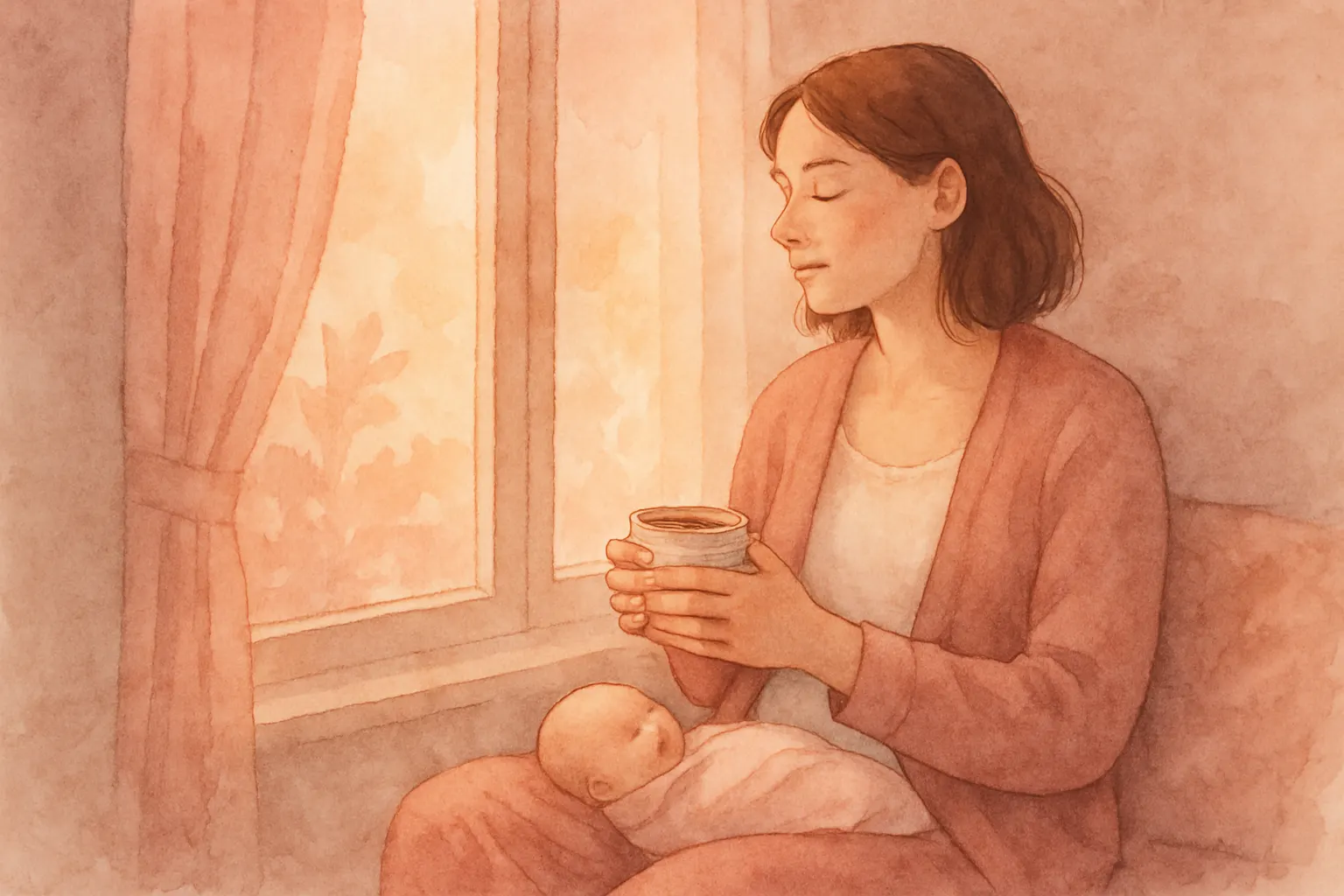
You just had a baby. You're supposed to be happy. But you're crying at things that don't matter. You're exhausted in a way that sleep doesn't fix. You're wondering if something's wrong with you.
Here's the truth: Something might be. And that's not weakness. It's biology.
Let's talk about what's normal adjustment, what's baby blues, and what's postpartum depression.
Normal Postpartum Adjustment (This Is Fine)
Your life just changed completely. You have a new human who depends on you for everything. You're not sleeping. You're hormonal. Of course you're feeling weird.
Normal adjustment includes:- Feeling overwhelmed sometimes
- Crying randomly (especially in the first week or two)
- Feeling anxious about whether you're doing everything right
- Wanting quiet time alone
- Struggling to adjust to the loss of your pre-baby life
- Feeling protective/anxious about baby's safety
- Exhaustion that makes everything feel harder
- Touching baby constantly to make sure they're breathing
- Questioning whether you're cut out for motherhood
Baby Blues (Common and Temporary)
This is real postpartum mood shift that happens to about 80% of new moms. It's not mental illness. It's hormones crashing after 40 weeks of being elevated.
Baby blues looks like:- Crying easily (sometimes for no reason you can identify)
- Mood swings (happy one second, sad the next)
- Anxiety about baby's health or your abilities
- Difficulty sleeping even when baby is sleeping
- Irritability (your partner breathing wrong annoys you)
- Feeling overwhelmed by simple decisions
- Intrusive thoughts ("what if I drop the baby?" "what if I can't do this?")
Postpartum Depression (This Needs Help)
This is not baby blues. This is not weakness. This is a medical condition that happens when postpartum hormone shifts combine with other factors (sleep deprivation, trauma, previous mental health history, lack of support, life stress).
Postpartum depression can include:- Persistent sadness or numbness — Not just some sad moments. Feeling empty or depressed most of the day.
- Inability to bond with baby — Not feeling love or connection even though you know you should.
- Intrusive thoughts — Repetitive scary thoughts about harming yourself or the baby. (These are unwanted thoughts, not desires.)
- Inability to sleep even when baby sleeps — You're physically and mentally too activated.
- Intense anxiety or panic — Racing heart, shortness of breath, feeling like something terrible is happening.
- Loss of interest in things you normally enjoy — Everything feels gray. Nothing sounds good.
- Guilt or shame — Feeling like you're failing, that baby would be better off without you, that you're a bad mother.
- Difficulty concentrating — Brain fog beyond just being tired.
- Thoughts of harming yourself — Not just intrusive thoughts, but actual plans or desires.
- Physical symptoms — Headaches, body aches, unexplained pain.
Postpartum OCD (Often Missed)
This is different from depression and gets overlooked because it looks like anxiety.
PPO-OCD includes:- Intrusive, unwanted thoughts about harming baby (you accidentally dropping them, suffocating them, yourself hurting them)
- Repetitive checking (checking if baby is breathing constantly, checking on baby repeatedly)
- Compulsive behaviors to manage anxiety (excessive cleaning, counting, organizing)
- Intense guilt about the thoughts even though you don't want them
- Hypervigilance — being on high alert constantly
Postpartum Anxiety (Also Real and Treatable)
Not the normal "is my baby okay?" anxiety that most moms have. Real postpartum anxiety.
Looks like:- Constant, exhausting worry that doesn't turn off
- Physical anxiety symptoms (racing heart, sweating, feeling like something bad will happen)
- Inability to relax even when baby is safe
- Catastrophic thinking (if baby sleeps too long, they're dead; if I leave the room, something will happen)
- Panic attacks
- Hypervigilance
The Self-Check
Ask yourself:
Is this getting better or worse?- Baby blues gets better. PPD usually doesn't without help.
- If not, that's a sign you need support.
- Numbness is concerning. Connection usually grows even in hard adjustment.
- Some worry is normal. Constant debilitating worry is not.
- If yes, call your doctor or a crisis line now. This is serious.
- Lack of support makes everything harder and can contribute to depression.
What to Do if You Think Something's Wrong
Talk to your OB/GYN or midwife. Tell them how you're feeling. Don't downplay it. They've heard this before. Be specific. "I feel sad sometimes" vs. "I can't stop crying and I feel worthless" are very different. There's no judgment. Your doctor isn't thinking you're weak or failing. They're thinking "let's get you support." If your doctor dismisses you, get a second opinion. You know your body. Trust yourself. Ask for a referral to a therapist. Therapy helps PPD, PPA, and PPO-OCD. Ask about medication. Some meds are safe while breastfeeding. Some aren't. Your doctor can guide you. Call a crisis line if you're in danger. Postpartum Support International: 1-800-944-4773. They specialize in this.What Helps (General)
- Sleep. Seriously. Sleep deprivation makes everything worse. If you can get someone to take baby for one longer sleep block, do it.
- Support. Friends, family, a postpartum doula, or a therapist. You need people.
- Talking about it. Not keeping it secret. Shame grows in silence.
- Realistic expectations. You don't need to be perfect. You need to be okay.
- Asking for help. "I need help" is not failure. It's wisdom.
- Movement. A walk, yoga, swimming — anything that helps your nervous system calm down.
- Connecting with other moms. Knowing you're not the only one helps.
The Thing They Don't Tell You
Postpartum depression and anxiety are COMMON. Not rare. Not something you caused. Just something that happens to a significant number of people who have babies.
You didn't think positive enough. You didn't prepare hard enough. You didn't want the baby enough. None of that caused this.
Your brain chemistry shifted. That's medical. That's real. That deserves treatment.
You're Not Alone
If you're struggling, reach out. To your doctor, to your partner, to a friend who's been there, to Postpartum Support International.
You don't have to white-knuckle through this. Help exists. You deserve to feel okay again.
And postpartum you? You're not broken. You're just in a phase that's harder than anyone talked about. That's okay. It gets better. 💛