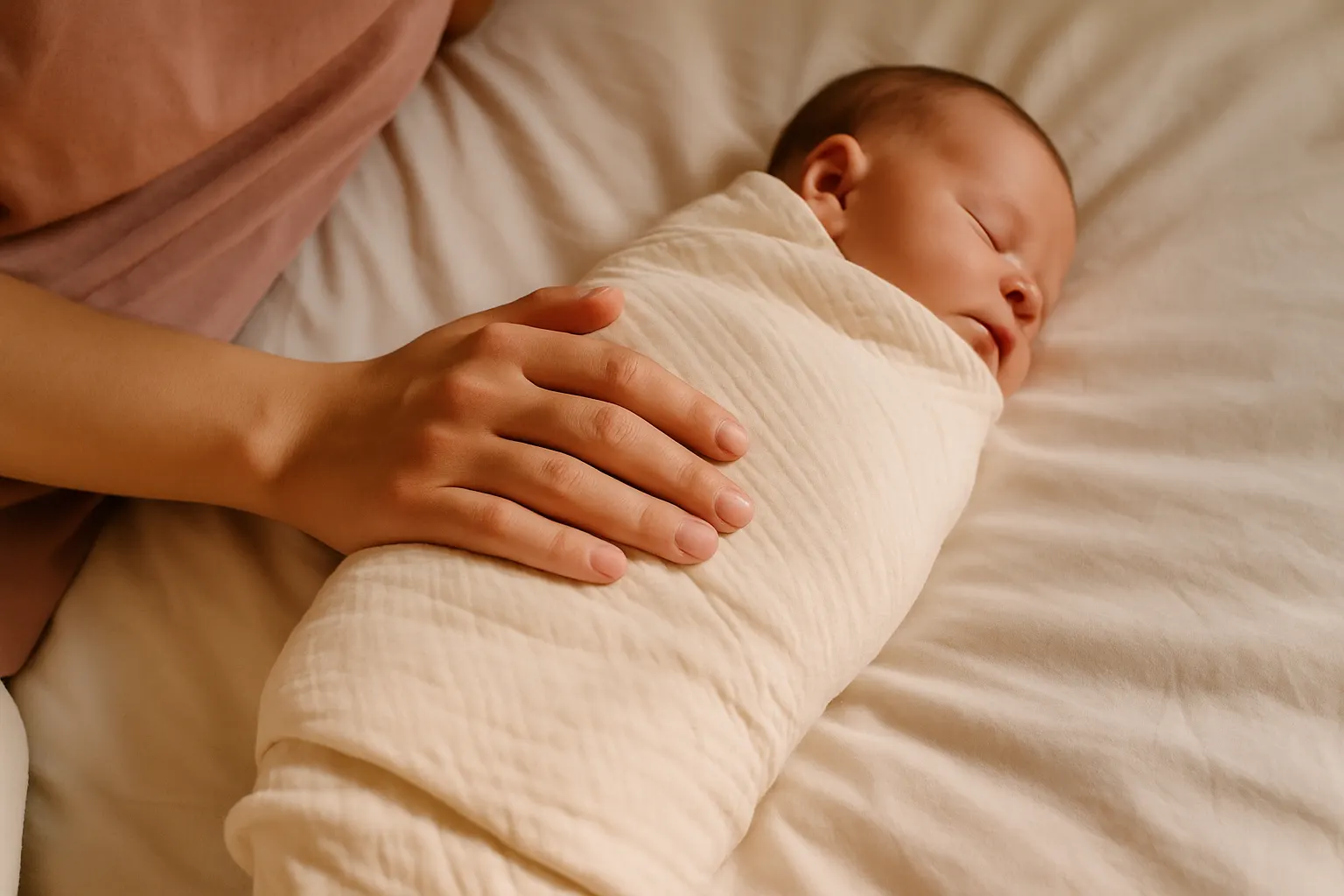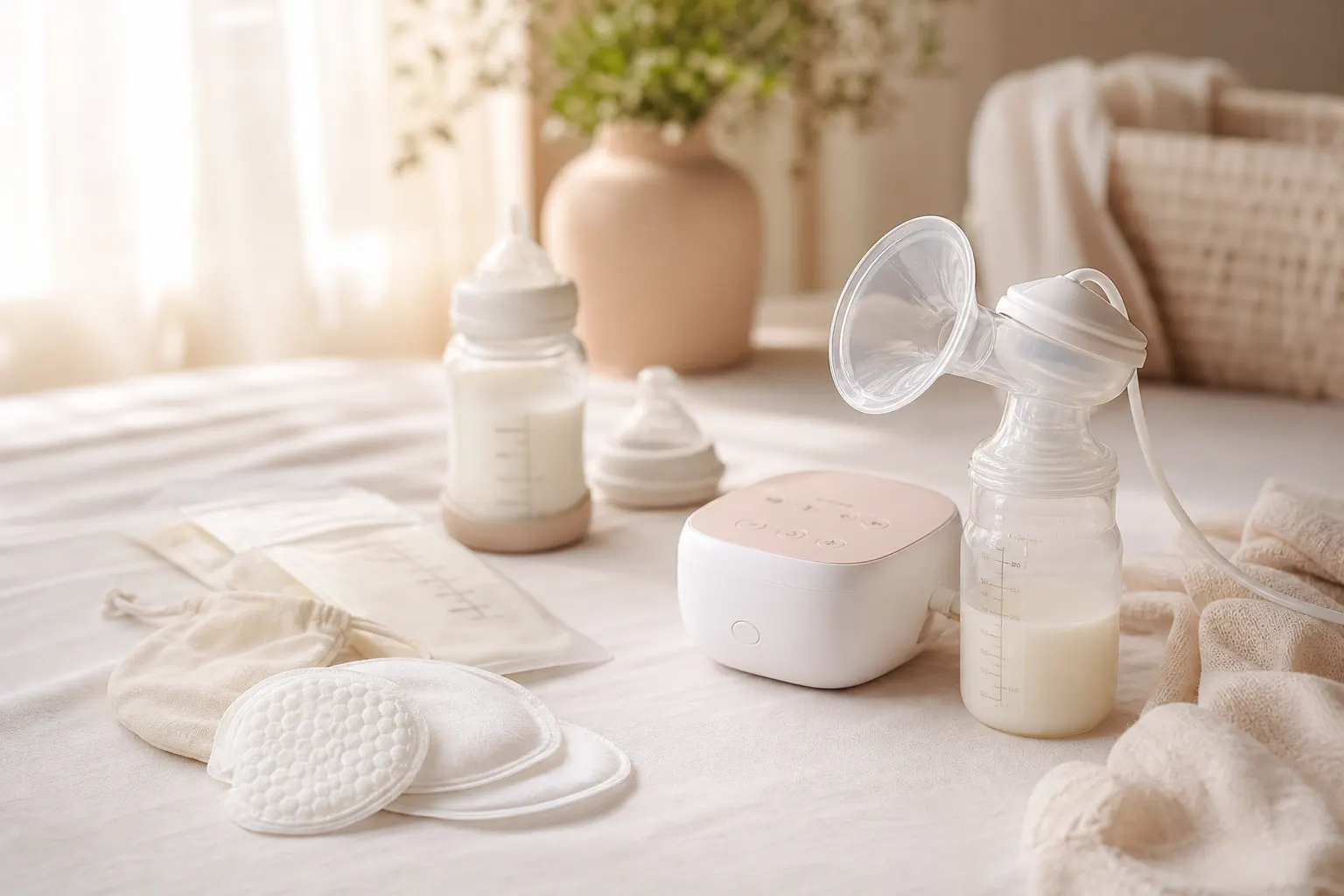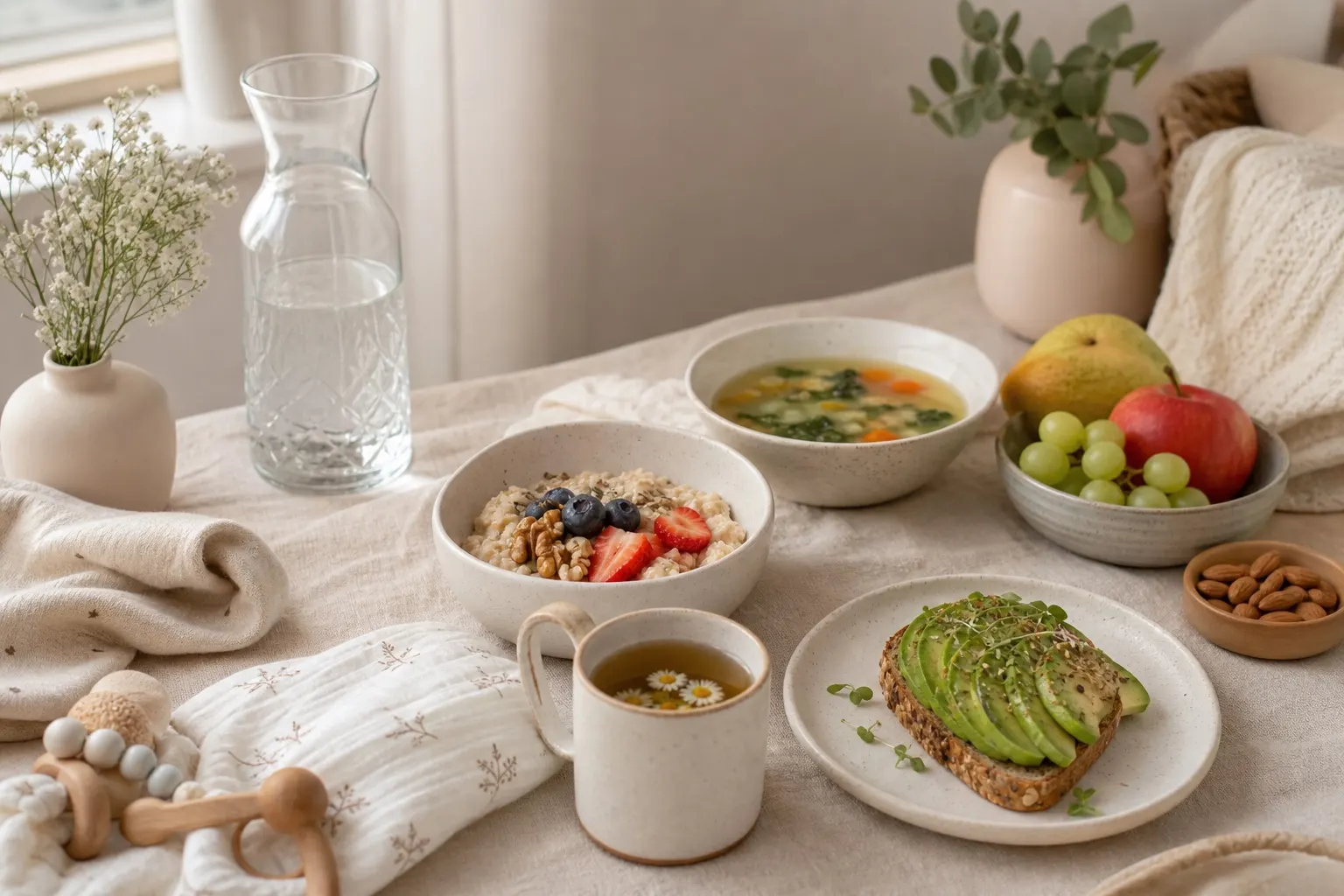
Nobody hands you a meal plan at discharge. You get a folder of pamphlets, a mesh underwear sample pack, and a "good luck out there." Meanwhile, your body just did the most physically demanding thing it will ever do, and it needs fuel to actually heal.
This post contains affiliate links. We may earn a small commission at no extra cost to you. TL;DR: Postpartum nutrition isn't about dieting. It's about eating enough calories to recover, stabilize hormones, and support breastfeeding if you're doing it—all while functioning on three hours of sleep. The bar is low. Calories in counts.Why Postpartum Nutrition Actually Matters
Your body is in a full-scale repair operation right now. Uterine involution, tissue healing, hormone rebalancing, blood volume normalization—all of that requires nutrients. Lots of them.
This is not the time to restrict calories. This is not the time to cut carbs. The "bounce-back" pressure you're seeing everywhere is nonsense that people made up to sell things to exhausted women.
Your Body Is in Repair Mode
Iron levels dropped from blood loss. Collagen is rebuilding in scar tissue or your pelvic floor. Your thyroid is recalibrating. Your gut needs to recover from the stress of labor. You need protein, iron, calcium, healthy fats, and enough overall calories to support all of that—on top of whatever energy breastfeeding takes (up to 500 extra calories a day, by the way).
If you had a c-section, your surgical wound healing requires even more protein and vitamin C than a vaginal delivery.
How Many Calories Do You Actually Need?
Most non-breastfeeding women need roughly 1,800–2,200 calories a day in the postpartum period. If you're breastfeeding, that's 500 more on top of that.
In practice: You probably need more than you think, and you're probably eating less than that because you're exhausted, distracted, and not hungry at normal times. Prioritize calorie density.Breastfeeding Changes the Math
Milk production is metabolically expensive. Your body will raid its own stores to keep milk supply up—meaning if you're not eating enough, you suffer. Lower energy. Worse mood. Slower healing. Your milk quality doesn't tank immediately, but your body absolutely does.
Eat. The Office on Women's Health recommends breastfeeding mothers get plenty of protein, calcium, and DHA (omega-3s found in fish and supplements) to support both milk production and their own recovery.
A good postnatal vitamin closes nutritional gaps when you're not eating a balanced diet (which is every day with a newborn). Take one. Non-negotiable.
The Best Foods for Postpartum Recovery
Here's what to actually prioritize. No recipes. No elaborate prep. Just categories and ideas.
Iron-rich foods: Red meat, lentils, fortified cereals, spinach, beans. Iron restores what you lost in bleeding and fights postpartum fatigue. Eat it with vitamin C to absorb it better. Protein: Eggs, Greek yogurt, peanut butter, deli turkey rolled up, cottage cheese, nuts. Your body needs protein to repair tissue and produce milk. Shoot for 70–100g a day. Healthy fats: Avocado, nuts, olive oil, salmon. These support hormone production, brain function, and DHA in breast milk. Don't fear fat. Calcium: Dairy, fortified plant milks, canned salmon with bones, leafy greens. Your body will steal calcium from your bones to put into breast milk if you're not getting enough. Fiber: Oatmeal, fruits, vegetables, beans. This is also your constipation solution, which, as you may already know, is a postpartum crisis of its own.Prioritize Iron, Calcium, and Healthy Fats
If you can only remember three things: iron, calcium, fat. Everything else is a bonus. These are the nutrients your postpartum body is most likely to be low on, and they have the most impact on how you feel.
Eating When You Have No Time or Energy
Here's the real talk: cooking a nutritious meal is impossible when you're holding a baby who only sleeps on your chest. So let's talk about actual logistics.
Accept help in food form. When someone asks what they can do, say "bring food." Specifically: something you can eat one-handed. Burritos. Sandwiches. Snack boards. Not soup. Stock your nightstand. Seriously. Keep snacks within arm's reach of where you feed the baby. You will be ravenous at 3 AM. Lactation-support snacks are convenient and have ingredients like oats and flaxseed that support milk supply. Keep protein bars on hand. Protein bars for nursing moms are not a replacement for real food, but they're a 30-second snack that's better than nothing. Keep them in your diaper bag, nightstand, and car.The One-Handed Snack Strategy
Build a mental list of things you can eat with one hand while a baby is attached to the other. This list becomes your survival plan.
Ideas: string cheese, boiled eggs, grapes, crackers with peanut butter (peanut-free if allergic family history), banana, yogurt cup with a spoon, pre-cut veggies, trail mix, anything in a tortilla.
Batch-cook when you can. Freezer meals from your third trimester are your past self doing your present self a massive favor. If you didn't make them, ask someone else to. If you're still pregnant, start planning now—it really matters.
What to Skip (Or at Least Limit)
Excessive caffeine: More than 200–300mg a day (roughly 2 cups of coffee) can pass into breast milk and affect baby's sleep. If your baby seems wired or fussy after your second latte, that might be why. Alcohol: Small amounts occasionally are generally considered okay (wait 2-3 hours after drinking before nursing). But if you're sleep-deprived and stressed, alcohol tends to make both worse. Highly processed, low-nutrient food: If it's quick and easy, eat it—survival mode is real. But if you're subsisting entirely on chips and cookies, you're going to feel worse than you already do. Try to anchor processed snacks with something protein-based.For more on the full postpartum physical recovery picture, see Postpartum Recovery: The Things No One Warned Me About.
FAQ
How long should I keep taking postnatal vitamins?
Most doctors recommend continuing postnatal vitamins for the entire breastfeeding period, and at least 6 months postpartum even if you're not breastfeeding. Your body is still in recovery mode long after the six-week checkup.
Will eating more calories make me gain weight postpartum?
Not necessarily. Your body is using those calories to heal, produce milk, and regulate hormones—not to store fat. Eating enough is actually important for metabolic recovery. Undereating can slow recovery and affect milk supply.
Does what I eat affect my breast milk quality?
Mostly yes for certain nutrients (DHA, vitamin D, iodine, vitamin B12) but your body protects milk quality pretty aggressively at its own expense. This is why you feel run-down when undereating, even if your milk seems fine. Eat for yourself, not just the milk.