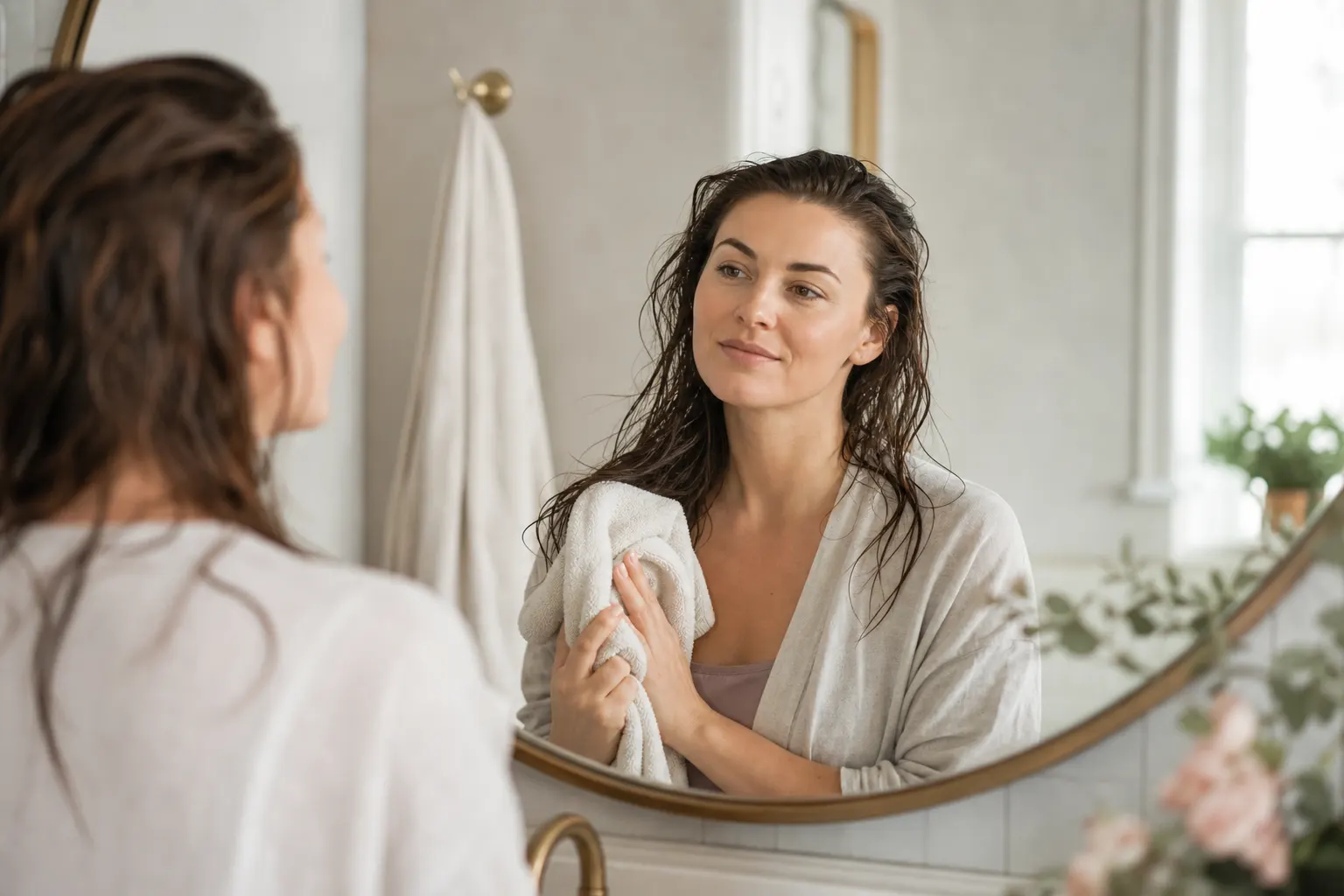
You're three months postpartum. You get out of the shower, look at the drain, and nearly have a breakdown. Clumps of hair. In your brush. On your pillow. Everywhere.
This post contains affiliate links. We may earn a small commission at no extra cost to you.First: you're not going bald. You're not sick. You're not doing anything wrong.
Postpartum hair loss is one of the most common — and most terrifying — surprises after having a baby. It affects up to 90% of new moms, and almost nobody warns you about it ahead of time. TL;DR: Your hair is falling out because of the massive hormone drop after birth. It peaks around 3–4 months postpartum and usually resolves by month 6–12. You can't stop it, but you can support your hair health while it runs its course.Why Postpartum Hair Loss Happens
The hormone crash is the culprit
During pregnancy, your estrogen levels skyrocket. High estrogen extends the "growth phase" of your hair follicles, which means less hair falls out than normal. That's why pregnant people often have thick, gorgeous hair by the third trimester.
Then you deliver the baby, the placenta is gone, and estrogen crashes hard and fast. All those hairs that stayed in the growth phase longer than usual? They all shift into the shedding phase at once.
This is called telogen effluvium — a medical term for "your body just went through something huge and your hair is catching up."
It's not a deficiency. It's not a disease. It's a delayed biological response to birth.
When Does Postpartum Hair Shedding Peak?
Expect it around months 3–4
Most moms notice the shedding starting around 2–3 months postpartum and peaking somewhere around month 3–4. This catches a lot of people off guard because the timing feels disconnected from birth.
You had the baby months ago. Why is your hair falling out now?
Because hair follicles work on a delayed cycle. The shift from growth to shedding takes time to show up on your head.
What normal shedding looks like:- More hair in the drain than you've ever seen
- Clumps coming out when you brush
- A noticeable thinning at the temples and hairline
- Hair all over your clothes, pillow, and couch
- Finding hair wrapped around your baby's fingers (that's a whole separate concern — check toes and fingers regularly for hair tourniquets)
- Bald patches (vs. overall thinning)
- Shedding that gets worse after 6 months instead of better
- Hair loss accompanied by fatigue, weight gain, or feeling cold all the time (that could be thyroid-related)
How Long Does Postpartum Hair Loss Last?
Most moms see regrowth by 6–12 months
For most people, the worst of the shedding is over by month 6. By month 9–12, you'll start seeing regrowth — those little baby hairs around your hairline are actually a good sign, even though they look funny.
A small percentage of moms take longer, especially if breastfeeding extends the hormone fluctuations. If you're still seeing significant shedding at 12 months, that's worth mentioning to your OB or a dermatologist.
Here's what regrowth looks like: short, fine hairs around your temples and hairline, starting around 4–6 months. They stick up. They don't cooperate with styling. They're normal. They're your hair coming back.
What Actually Helps (and What Doesn't)
Supporting your hair through the process
You can't stop postpartum hair loss. It's hormonal and it will run its course. But you can support your hair health so it comes back stronger.
What actually helps:- Keep taking your prenatal vitamins. This is probably the single most helpful thing. Prenatal vitamins include biotin, folate, and iron — all things your hair needs. Prenatal vitamins for postpartum are worth continuing through the first year, especially if you're breastfeeding.
- Eat enough protein. Your hair is made of keratin, which is protein. If you're undereating (which is incredibly common in those exhausted early months), your body deprioritizes hair. Eggs, Greek yogurt, meat, legumes — try to get enough.
- Be gentle. This is not the time for aggressive brushing, tight ponytails, or heat styling every day. Be as gentle as possible with your hair right now.
- Use a wide-tooth comb on wet hair. Wet hair is more fragile. A wide-tooth comb reduces breakage when you're already losing more than usual.
- Consider a volumizing shampoo. It won't stop shedding, but it can make thinning hair look and feel less dramatic. Volumizing shampoos for fine hair are a small thing that genuinely helps your confidence while you wait for regrowth.
- Expensive hair loss treatments — most aren't tested on postpartum people and aren't addressing the actual cause
- Cutting your hair drastically (it won't grow back faster, but a shorter style can make thinning less visible if that helps you feel better)
- Stressing about it (easier said than done, but stress does make it worse)
According to the American Academy of Dermatology, excessive hair shedding after pregnancy usually resolves on its own without treatment. Their guidance: wait it out, support your body, and see a dermatologist if you're still concerned at the 12-month mark.
The Emotional Part Nobody Talks About
It messes with your head in ways that feel disproportionate
Your hair is part of your identity. Watching it fall out in clumps while you're already exhausted, not sleeping, and adjusting to a body that feels foreign? It's a lot.
A lot of moms report feeling genuinely distressed about postpartum hair loss — and then feeling guilty for caring about their hair when they "should" just be grateful they have a healthy baby.
You're allowed to feel sad about your hair. You're allowed to grieve the way your body looked before. These feelings don't make you vain or ungrateful.
Tell someone how you're feeling. Ask for support. It's a real thing that real moms go through.
When to Talk to Your Doctor
If you're worried, bring it up at your postpartum checkup. Your doctor can rule out:
- Thyroid issues — postpartum thyroiditis affects up to 10% of moms and can cause hair loss along with fatigue, mood changes, and weight fluctuation
- Iron deficiency anemia — common postpartum, especially after significant blood loss
- Nutritional deficiencies — if you're not absorbing or eating enough
A simple blood panel can check all of this. It's worth asking for if the shedding feels extreme or you have other symptoms.
If you're in the thick of the postpartum phase, the Postpartum Recovery Guide has more on what to expect from your body in the first 12 weeks.
---
FAQ
How much postpartum hair loss is normal?
Losing 100–200+ hairs per day during peak postpartum shedding is common — compared to the typical 50–100 hairs per day before pregnancy. It can look dramatic, especially when it collects in the drain or on your pillow, but it's within the range of normal for most moms.
Will my hair grow back the same as before pregnancy?
For most people, yes. The texture might be slightly different — some moms notice their hair coming back a bit wavier or finer — but overall thickness usually returns by 12–18 months postpartum. Hair that doesn't return to baseline by 18 months is worth discussing with a dermatologist.
Can breastfeeding make postpartum hair loss worse?
Breastfeeding keeps your prolactin levels elevated and estrogen lower for longer, which can extend the period of shedding. Some moms notice the shedding starting or worsening when they wean, as hormones shift again. It's not a reason to stop breastfeeding — just something to know.