Nobody tells you how hard it is to cook a real meal when you're sleep-deprived, leaking, and keeping a newborn alive. The moms who warned you about nipple cream? They forgot to tell you about this.
This post contains affiliate links. We may earn a small commission at no extra cost to you. TL;DR: Start batch cooking freezer meals in weeks 32–36. Soups, casseroles, and burritos freeze beautifully, reheat fast, and will genuinely carry you through the first 4-6 weeks postpartum. Aim for 20-30 meals. One big cook session is better than six small ones.Why Freezer Meals in the Third Trimester Are Non-Negotiable
The third trimester hits and suddenly everyone's giving advice about the hospital bag. Nobody's telling you to cook. That's backward.
Your postpartum self will have zero bandwidth for the kitchen. You'll be recovering, feeding around the clock, and running on three hours of sleep. The absolute last thing you'll want to do is figure out dinner.
When to Start Cooking
Weeks 32–36 are the sweet spot. You still have energy (relatively), your belly isn't enormous yet, and you have time before leave kicks in. Don't wait until week 38 — you'll be too tired and too done.
Get yourself a set of good meal prep containers that are both freezer and microwave safe. Glass ones are worth the investment because they go from freezer to microwave without leaching anything gross. You're growing a human — skip the plastic.
The Best Freezer Meals for Third Trimester Batch Cooking
You want meals that: (1) freeze without getting weird, (2) reheat in under 10 minutes, (3) are actually nutritious, and (4) can be eaten one-handed. That last one matters more than you think.
Soups and Stews (Your Best Friend)
Soups are the MVP of postpartum freezer meals. Chicken soup, lentil soup, turkey chili, minestrone — they all freeze perfectly and reheat in five minutes. Make a double batch of any soup recipe and you've got 8-10 servings done.
Iron and protein matter postpartum (and during pregnancy too). Lentil soup checks both boxes and is stupidly cheap to make. According to NIH, iron needs increase dramatically postpartum, especially if you had any blood loss during delivery. Bone broth-based soups are a solid way to get nutrients in without a lot of effort.
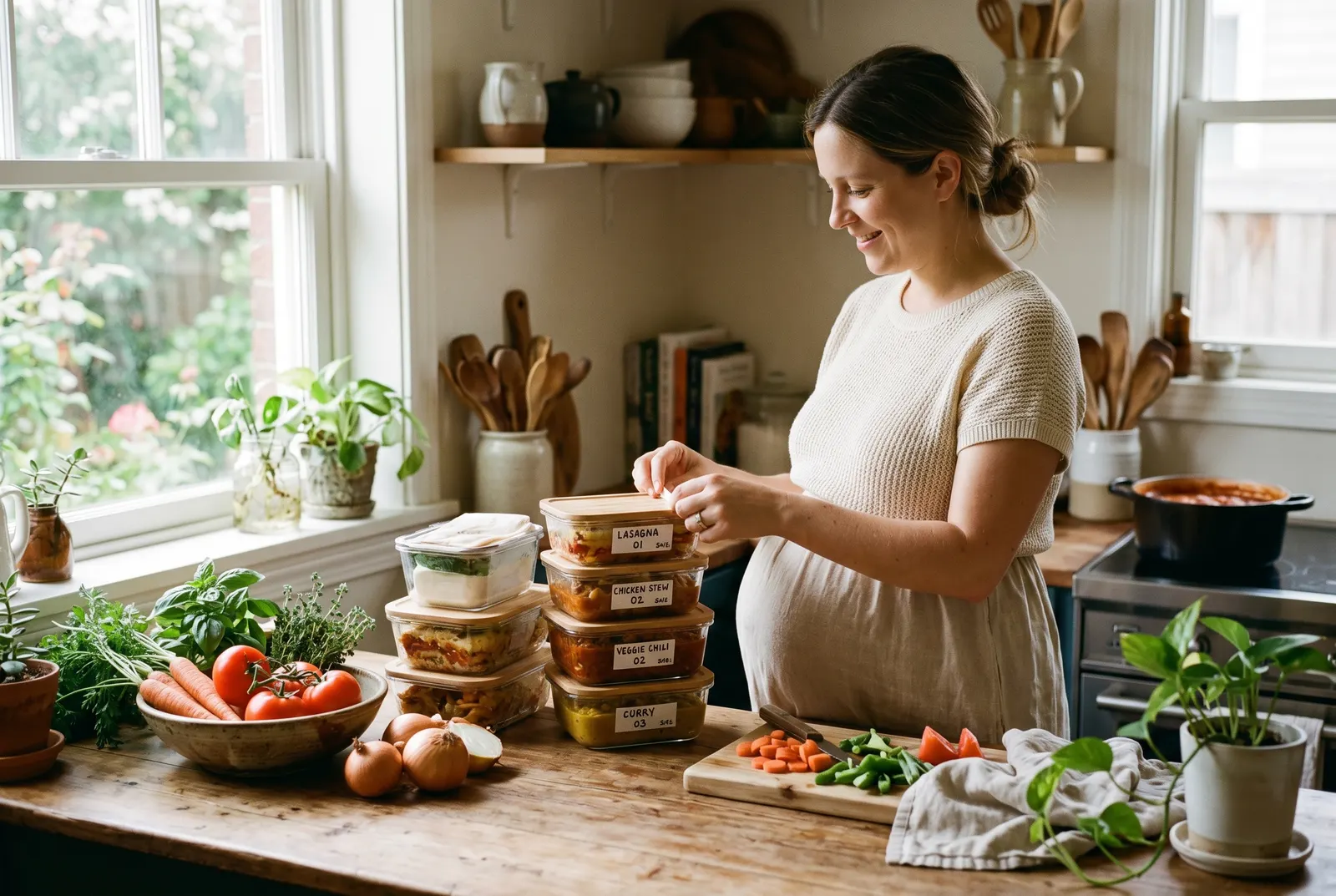
Batch tip: Make a 12-quart pot. Freeze in 2-cup portions. Label with the date and what it is. You'll thank yourself.Casseroles and Sheet Pan Dinners That Actually Freeze Well
Not everything freezes well, and learning this the hard way is a waste of precious energy. Stick to what works.
Freezes beautifully:- Lasagna (classic, hearty, partner-proof to reheat)
- Enchiladas
- Shepherd's pie
- Baked ziti
- Chicken pot pie filling (freeze the filling, use store-bought crust fresh)
- Salads (obviously)
- Anything with raw potatoes
- Cream-based sauces (they separate — disappointing)
- Egg dishes that aren't specifically designed for freezing
An Instant Pot is genuinely life-changing for batch cooking. You can pressure-cook a whole chicken in 25 minutes, shred it, and use the meat across three different freezer meals in one afternoon. If you don't have one yet, this is the time.
How Many Meals Should You Make?
Real talk: 20-30 meals sounds like a lot but goes faster than you think. You'll have visitors who eat, partners who eat, and days where you eat the same thing twice because you just can't make a decision.
Aim for variety so you don't lose your mind eating the same lasagna for two weeks. Build a rotation of 5-6 different recipes and make 4-5 servings of each.
The One-Day Batch Cook Strategy
You don't need to spread this across weeks of casual cooking. One focused afternoon — 4-5 hours — can produce 25+ meals if you plan it.
Your Game Plan
- Plan the menu the week before. Pick 5-6 recipes. Make a master shopping list.
- Shop once — don't make multiple trips. Use your grocery delivery to avoid the energy drain of the store.
- Start with the longest-cooking things first (casseroles, roasts) and do the fast stuff (burrito filling, soups) while those bake.
- Label everything. Name, date, reheating instructions. Postpartum you will not remember what "mystery soup" is.
- Rest after. Seriously. Sit down.
If you're exhausted halfway through, stop. Fifteen meals are infinitely better than zero. You can always do a second session later.
Getting Your Partner Involved
This is actually a good test of your partner's "I'll help with everything" energy. Batch cooking day is a practical way to get them into the kitchen with clear tasks: chopping, labeling, wrapping, stacking the freezer.
For what to expect from your partner in those early weeks — not just in the kitchen but with night feeds, emotions, and everything else — the Dad's Role in the First 6 Weeks post is a good read to share.
If they're up for it, consider a slow cooker session where they handle the chili while you focus on the casseroles. Divide and freeze.
What Postpartum You Will Actually Eat
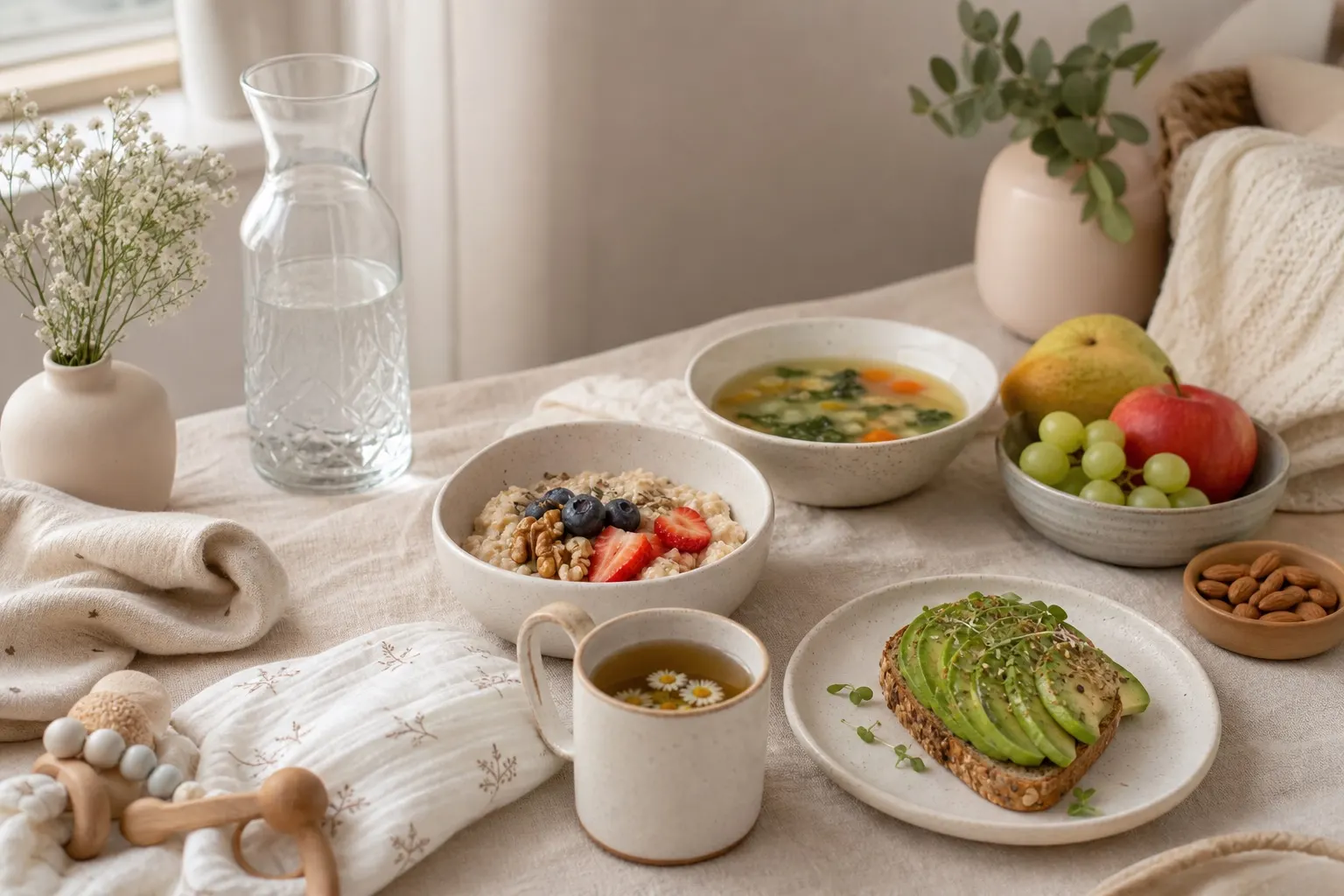
Here's what real moms report wanting those first weeks: warm, easy, not too complicated, preferably one-handed. No one is craving a deconstructed salad at 3am.
Top requests:- Soups and broth (easy to eat, nourishing)
- Breakfast burritos (can eat frozen in two minutes, high protein)
- Muffins and energy balls (not full meals, but so important for snacking)
- Pasta dishes (carbs, warmth, comfort)
- Anything you love — your postpartum self deserves to eat things she actually likes
Don't only freeze virtuous kale things. Freeze the mac and cheese too. You're healing. Calories count. Comfort counts.
FAQ
How far in advance should I start making freezer meals?
Start around week 32-34 of pregnancy, wrapping up by week 36-37. This gives you time before your due date and before exhaustion fully sets in. Even starting at week 38 is better than nothing — a few meals in the freezer is still a win.
What foods don't freeze well for postpartum meal prep?
Dishes with heavy cream sauces, raw potatoes, or high-water vegetables (cucumbers, lettuce) don't freeze well. Stick to soups, casseroles, marinated proteins, breakfast items, and grain-based dishes. Most legume-based recipes freeze beautifully.
How do I reheat frozen meals safely while breastfeeding?
Reheat to an internal temperature of 165°F (74°C) — use a food thermometer if you're unsure. Microwave works fine for soups and casseroles; oven works better for things like enchiladas or lasagna if you have time. Avoid partial reheating; heat all the way through and eat immediately.