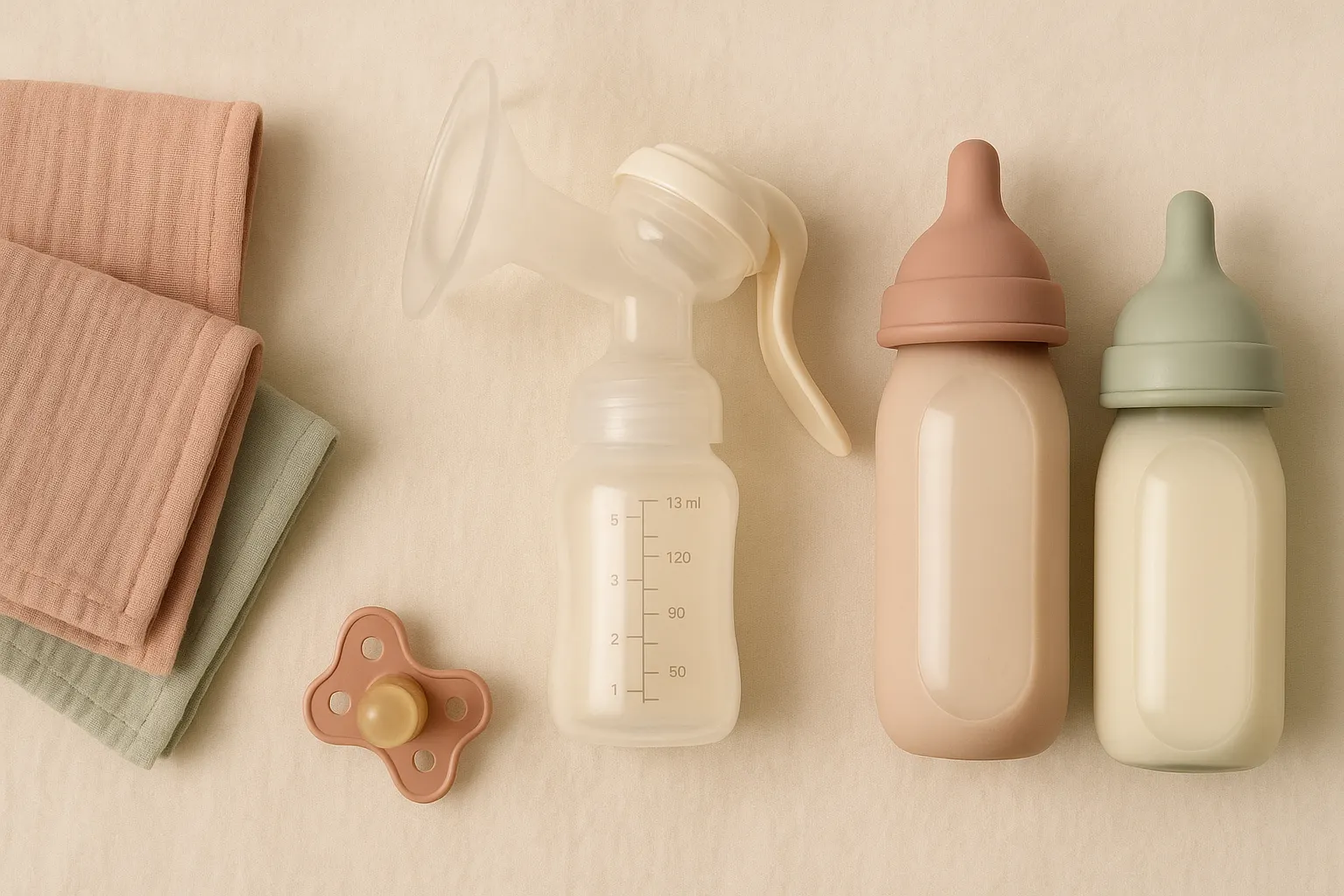
Let's talk about feeding your baby, which is weirdly the most judgmental topic in motherhood.
This post contains affiliate links. We may earn a small commission at no extra cost to you.You'll get unsolicited opinions about how you feed your baby from people who have zero stake in it. Ignore them. Feed your baby. That's literally the only rule that matters.
The Truth About Breastfeeding
It's natural, but that doesn't mean it's easy. And it's also completely valid if you decide it's not for you.
The Benefits (If It Works For You)
- Convenience: Your boob is always at the right temperature, ready to go. No bottles to prep at 3 AM.
- Cost: Free (mostly). Formula is expensive.
- Bonding: Yes, skin-to-skin contact is real and it matters. But so is formula feeding with eye contact and comfort.
- Your body recovers faster: Breastfeeding releases oxytocin, which helps your uterus shrink back down.
- Antibodies: Your milk has antibodies tailored to your baby and your environment. That's genuinely cool.
The Reality (What They Don't Tell You)
- It can hurt like hell. Cracked nipples, engorgement, mastitis, thrush (a yeast infection on your nipple — it sucks). The first 3-4 weeks are often painful.
- It's frequent. Newborns eat every 2-3 hours, sometimes for 45 minutes at a time. You will spend an insane amount of time attached to your baby.
- You can't leave easily. Not at first. You're the food source. If you pump, you need to plan around timing.
- Mastitis is medical and terrible. Blocked ducts lead to infections with fever, pain, and sometimes antibiotics. It happens to lots of breastfeeding people.
- Supply anxiety is real. You can't see how much milk baby is getting. You'll Google "is my baby eating enough" at 2 AM on day 3. It's normal and also exhausting.
- Not everyone's body cooperates. Low supply, oversupply, tongue tie (baby can't latch properly) — there are real physical reasons breastfeeding doesn't work for some people.
- It's touched-out levels of contact. Your baby literally lives on your chest. Some moms love this. Some moms lose their mind. Both are valid.
Making Breastfeeding Work (If You Want To)
Get help early. Lactation consultants are incredible. Hospitals have them. Use them before you leave. Bad latch = painful breastfeeding. Good latch = actually manageable. Use nipple cream liberally. Good nipple cream makes a difference. The kind you can use while baby eats. A Haakaa silicone pump is weirdly life-changing. You suction it onto one breast while baby eats from the other, and it collects milk you'd normally leak. It's not a "real" pump, but it's easy and gives you a bottle or two without electric pumping. Buy nursing pads. You will leak. Everywhere. On your shirt, on your partner, on the couch. Nursing pads save you from constant staining. If you pump, invest in a good pump or use insurance. Most insurance covers pumps (ask at your hospital). Hand-expressing is an option but it's slow. An electric or battery pump saves your sanity. Lactation cookies are placebo but tasty. They won't magically increase supply, but eating carbs and protein helps milk production. And cookies are delicious. Win-win. Don't compare your supply to anyone else's. Someone's always making more milk. Doesn't matter. If your baby is gaining weight and having wet diapers, you're making enough.The Truth About Formula
It's safe, it's effective, and your baby will thrive on it. Full stop. The stigma is outdated.
The Benefits
- Freedom. Anyone can feed the baby. You're not the only food source. You can leave for more than 2 hours without anxiety.
- You know exactly how much baby is eating. That supply anxiety? Gone.
- Your body is yours again. No engorgement, no mastitis, no being a 24-hour feeding station.
- Less time attached to your baby. If that's what you want, that's valid.
- You can plan around feeding times. More predictable schedule (usually).
- No pain. Actually, formula feeding is pain-free compared to breastfeeding struggles.
The Reality
- It's expensive. Formula is not cheap. Some brands cost more than others. Factor this into your budget.
- You have to prepare bottles. Sterilizing, mixing, temperature checks. It's a process (though it becomes automatic).
- Less convenient in certain situations. Late-night feed on a plane? You need bottles, water, formula. Breast is still easier in that moment.
- Judgment from strangers. Unfortunately real. Some people will comment. Ignore them.
Making Formula Feeding Work
Find a formula that works for your baby. Some babies do fine on any formula. Others have sensitivities. Your pediatrician can help if baby is fussy or constipated. Invest in good bottles. Some babies care more than others, but bottles that mimic a nipple can help if you're combo-feeding. Water matters. Some tap water is fine. Some needs filtering or bottling. Talk to your pediatrician about your local water. Prep bottles in advance. Wash them at night, sterilize if you want (honestly, dishwasher is fine for most), and have them ready so 3 AM feeds aren't chaotic. Formula doesn't need to be expensive. Generic store-brand formula is fine. FDA-regulated, same nutrition. You don't need boutique organic formula unless your baby has specific needs.Combo Feeding (Both Breast and Bottle)
This is actually super common and totally valid.
- Some moms breastfeed during the day and pump or use formula at night so someone else can take that 2 AM feed.
- Some babies get breast milk one feeding and formula the next.
- Some people breastfeed until 3 months, then switch to formula.
The Formula Guilt (Please Skip This Part)
You will feel guilty about feeding your baby formula, even though you shouldn't.
Formula is food. It's not poison. It's not subpar. Your baby will be fine. The research on breastfeeding is real, but the benefits are modest and the guilt is disproportionate.
Your baby benefits more from a sane, present mother who chose formula than a burned-out, resentful mother who forced breastfeeding. That's not poetic. That's just true.Making Your Decision
Ask yourself:
- Do I want to breastfeed? (Not "should I" — do I want to?)
- Do I have support to make it work? (Lactation help, partner support, ability to take time?)
- What's my backup plan if breastfeeding doesn't work out? (Because sometimes it just doesn't, and that's okay.)
- What's best for my mental health? (Seriously. If breastfeeding makes you depressed, switch to formula.)
- What can I actually sustain for as long as I want to feed this way? (If you hate pumping, don't plan to exclusively pump for a year.)
The Version That Actually Matters
Fed is best.
Not because breastfeeding doesn't have benefits — it does. Not because formula is magic — it's not. But because a baby who is fed, held, loved, and safe is thriving.
You get to choose. You get to change your mind. You get to do what works for your body and your family, and that's enough.
Whatever you pick, you're doing it right. 💚