Nobody tells you there's a whole research project waiting for you in the breast pump aisle. You're exhausted, your milk just came in, and now you're supposed to decode flanges and suction levels? No thank you.
This post contains affiliate links. We may earn a small commission at no extra cost to you. Quick answer: Most new moms do well with a mid-range double electric pump like the Spectra S2 or the Elvie Stride. If you pump occasionally, a manual works. If you pump at work every day, go hospital-grade or wearable. And yes — check your insurance first because the pump may be free.Here's what you actually need to know, without the marketing fluff.
How Insurance Changes Everything
Check Your Plan Before Buying Anything
Under the Affordable Care Act, most insurance plans are required to cover a breast pump at no cost to you. This is a big deal. Call your insurance provider or visit their portal before spending a single dollar.
Many insurers partner with companies like Aeroflow or Byram Healthcare, which ship a pump directly to your door. You may get to choose from a list of models — and that list often includes some solid options.
Don't skip this step. A good pump can run $200–$600 retail. Getting it free changes the math completely.
Double Electric vs. Wearable vs. Manual
The Three Main Types Explained
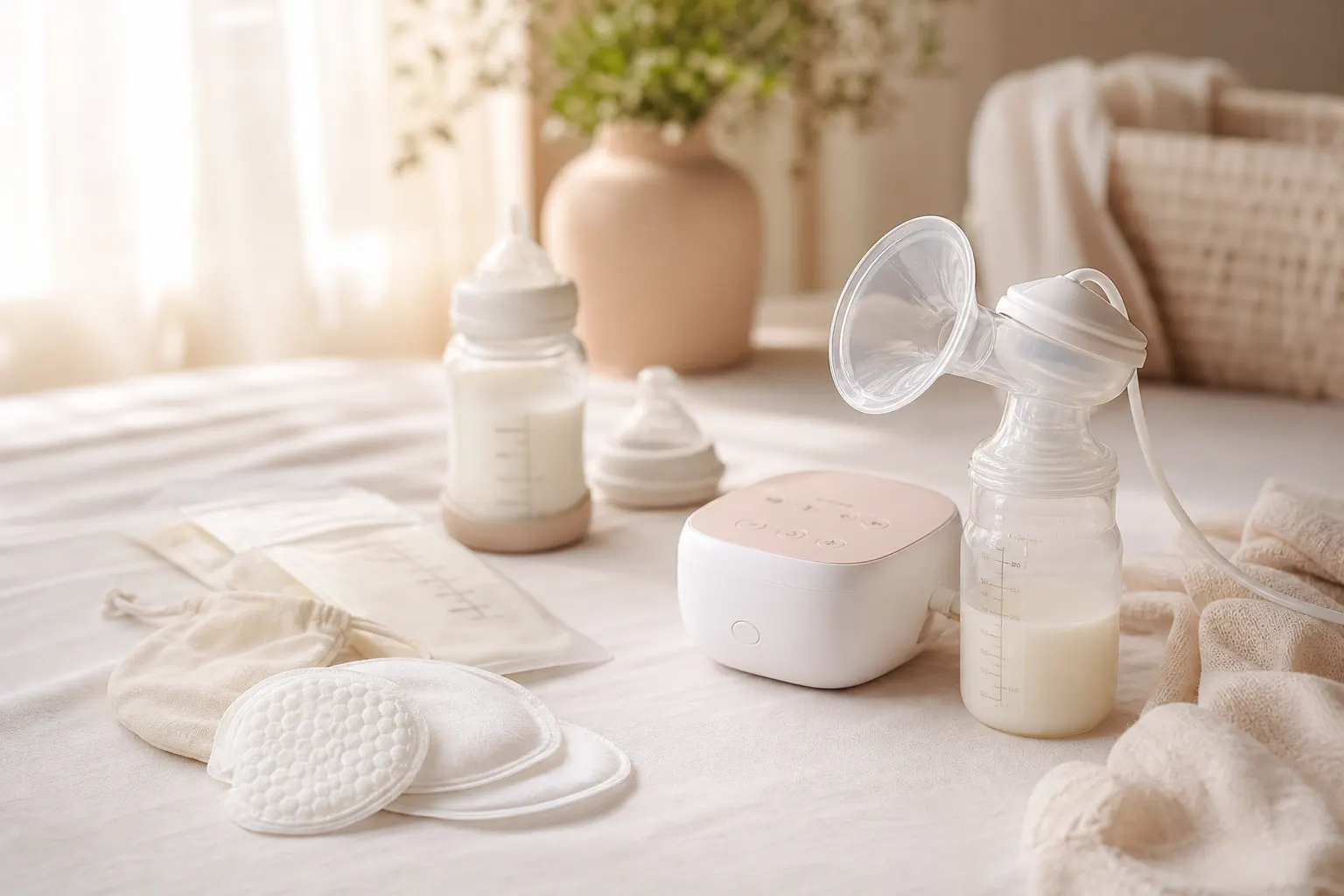
Double electric pumps are the workhorses. Both breasts at once, strong and consistent suction, relatively quiet (depending on the model). The Spectra S2 is a fan favorite among real moms — it's hospital-grade adjacent, covered by many insurance plans, and has a built-in night light for those 3 AM pumping sessions. Highly recommend if you're pumping regularly. Wearable pumps are the newer kid on the block. They fit inside your bra, no tubes, no sitting tethered to an outlet. The tradeoff: suction is generally weaker than a traditional pump, and they're expensive. If you need to pump hands-free during work calls or while doing literally anything else, a wearable like the Elvie Pump or Willow can be worth it as a secondary pump. Manual pumps are small, quiet, and require no power. They're perfect for occasional use, travel, or relieving engorgement on the fly. They won't work as your primary pump if you're building a stash or pumping multiple times per day — your hands will give out first.What the Flange Size Actually Matters For
Get This Wrong and Nothing Works
This is the most overlooked piece of advice in the pumping world: flange size matters enormously. A flange (the funnel-shaped piece that goes against your breast) needs to fit your nipple correctly or you'll have pain, poor output, and potentially nipple damage.
Most pumps come with 24mm or 28mm flanges. Many women need something smaller — 21mm or even 17mm is not unusual. If pumping hurts, check your flange size before assuming something is wrong with your supply.
A lactation consultant can measure you, or you can do it at home with a simple guide. There are also silicone flange inserts that help you customize the fit without buying a whole new pump.
Building a Stash: Do You Actually Need One?
The Real Talk on Freezer Milk
The internet will have you convinced you need a 500-ounce freezer stash before your baby arrives. You don't. A few days' worth of backup is plenty for most families. Oversupply has its own problems — engorgement, mastitis risk, and a lot of precious time spent at the pump.
If you're returning to work and need to pump daily, a good pumping schedule (start around week 3–4 once supply is established) and a reliable pump matters more than a massive stash.
Check out our guide on pumping at work for real tips that cover timing, storage, and making it work in less-than-ideal office situations.
For storing your milk, breast milk storage bags that lay flat freeze efficiently and take up less freezer space than bottles. Label everything with date and volume — you'll thank yourself later.
Cleaning, Sterilizing, and Not Losing Your Mind
The Simplified Routine
Pumping parts need to be cleaned after every use. You can rinse with soap and hot water, use a dishwasher basket on the top rack, or use microwave sterilizer bags for a quick clean between sessions.
One shortcut many working moms use: between pumps during the workday, stick parts in a zip-top bag in the fridge. This slows bacterial growth and means you only need a full wash once a day. It's not officially endorsed by everyone, but it's a practical reality for many moms. Use your judgment.
A drying rack dedicated to pump parts (like the Boon Grass Drying Rack) keeps your kitchen counter from turning into a pump part graveyard and lets things air dry without touching gross surfaces.
FAQ
What is the best breast pump for new moms?
For most new moms who plan to pump regularly, a double electric pump like the Spectra S2 or Medela Pump in Style is the best starting point. Check your insurance first — one of these may be available at no cost. If you need hands-free pumping at work, consider adding a wearable pump as a secondary option.
Does pumping hurt?
Pumping should not be painful. If it hurts, the most common culprit is the wrong flange size. Suction set too high is the second most common issue — start low and work up only until milk flows. Pain is a signal to troubleshoot, not push through.
When should I start pumping after birth?
If you're exclusively breastfeeding and supply is going well, there's no rush to introduce a pump in the first few weeks. Most lactation consultants suggest waiting until around 3–4 weeks to let your supply regulate. If you need to return to work earlier or there are latch/supply concerns, pumping from the start may be necessary — and that's okay too.