The best baby registry checklist is not the longest one. It is the one that covers safe sleep, diapering, feeding, a few clothes, transportation, and recovery support without turning your home into a warehouse. Quick answer: register for the things you will use every day, add a few convenience items that match your actual life, and skip anything that only solves a problem created by owning too much baby gear.
This post contains affiliate links. We may earn a small commission at no extra cost to you.If you already read our minimalist newborn essentials list, this is the registry version: practical, a little blunt, and designed to save you from the panic-buying spiral.
Start With Safe Sleep
Register for one safe sleep space: a bassinet, crib, mini crib, or pack-and-play. You do not need all four. If your bedroom is small, a bassinet or mini crib can make the first few months easier. If you want something that travels, a pack-and-play with a firm approved mattress can do more than one job.
Add two fitted sheets and one waterproof mattress protector. That is enough to survive spit-up, diaper leaks, and laundry delays. Skip crib bumpers, pillows, loose blankets, positioners, and decorative bedding. They look cute in photos and do nothing useful for a newborn.
For current safe sleep guidance, the American Academy of Pediatrics keeps a clear overview at HealthyChildren.org. The short version: firm flat surface, baby on their back, no loose stuff in the sleep area.
A couple of wearable swaddles are worth adding. Something like a Halo SleepSack swaddle is easier at 3 AM than trying to origami a blanket while half-awake.
Diapering Without the Fancy Setup
You need diapers, wipes, diaper cream, and a place to change the baby. That's the whole system.
Register for one small pack of newborn diapers and one small pack of size 1. Some babies never fit newborn size for long, and some live in it for weeks. Let the first week tell you what to buy in bulk.
A changing pad on top of a dresser works. A portable changing mat on the floor works. A dedicated changing table is fine if you have space, but it is not a parenting requirement. Add waterproof changing pad liners because those actually save laundry.
A diaper pail is optional, but if your nursery is near your bedroom, it becomes less optional fast. The Ubbi steel diaper pail is popular because it contains smell without special bags. A regular lidded trash can also works if your budget is tighter.
Feeding Gear Depends on Your Plan
Do not build a registry around a fantasy feeding plan. Build it around flexibility.
If you plan to breastfeed, register for nursing pads, nipple balm, a few nursing bras, and a simple manual milk catcher. A Haakaa manual breast pump can be helpful for collecting letdown without dealing with a full electric pump setup.
If you plan to bottle-feed or combo-feed, start with a small bottle set, a bottle brush, and a drying rack. Do not register for twenty bottles of one brand before you know what your baby accepts. Babies have opinions, which is rude but true.
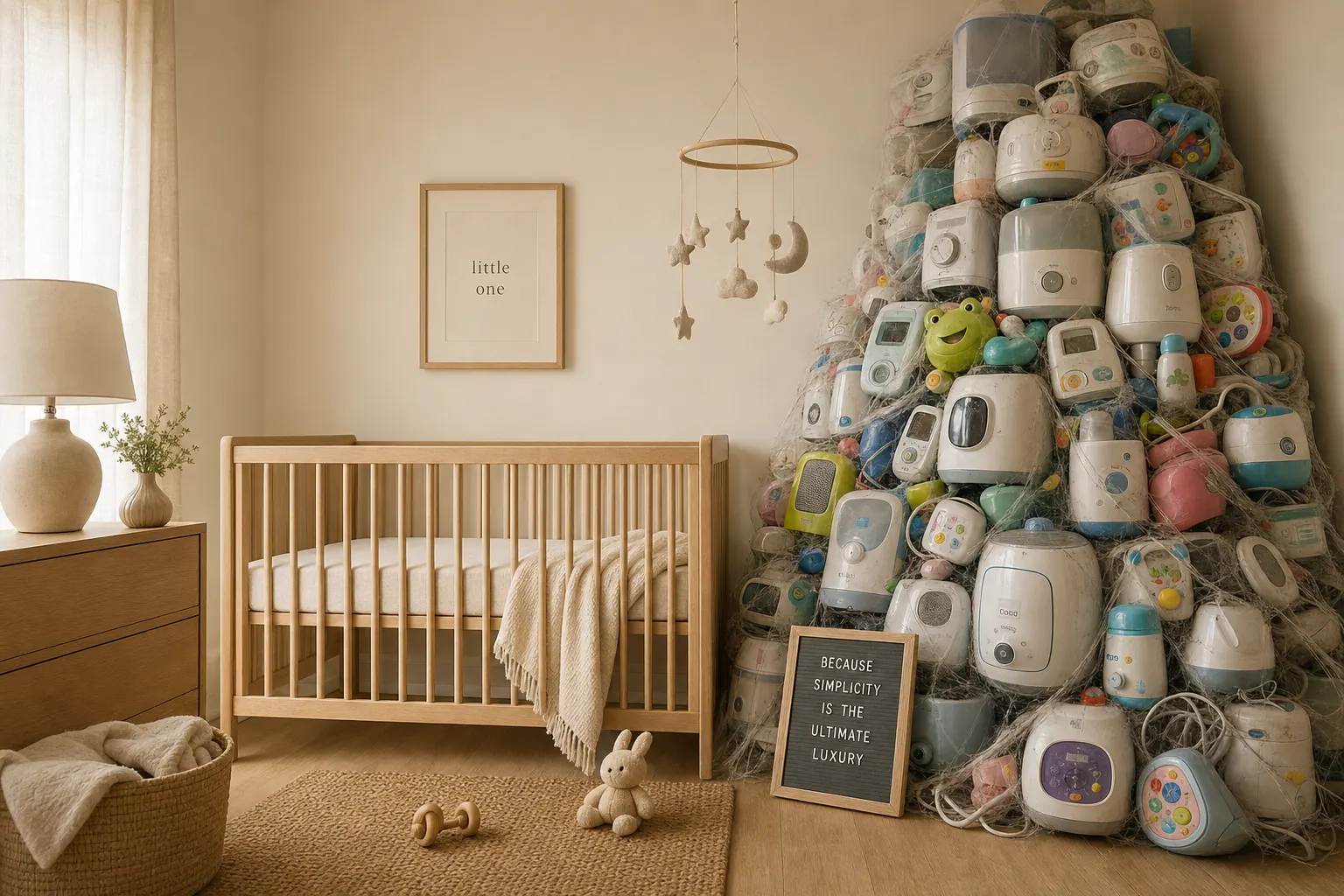
Bottle warmers, sterilizers, formula mixers, and specialty organizers are convenience items. Add them only if they match your kitchen, your budget, and your tolerance for extra counter clutter.
Clothes, Carrying, and Leaving the House
Newborn clothing should be boring on purpose. Register for zip sleepers, basic onesies, a few pants, socks, and one outfit you actually like for photos. Snaps at 2 AM are a betrayal. Zippers win.
Add a car seat if you do not already have one. This is non-negotiable. You cannot leave the hospital without a properly installed infant car seat or convertible seat approved for newborns.
A stroller is useful, but the "travel system" decision depends on your life. Apartment stairs, car trunk size, sidewalks, public transit, and whether you actually walk daily all matter more than influencer reviews. If you live in a small space, a lightweight stroller may be better than a giant system with cup holders and regret.
Register for one baby carrier if you want your hands back. A structured carrier is easier for many new parents than a long wrap. A newborn-friendly baby carrier can make grocery runs, contact naps, and witching hour pacing much easier.
The Things Worth Skipping
Skip wipe warmers unless you live in a very cold house and truly want one. Skip tiny shoes. Skip crib bedding sets. Skip complicated baby tech that creates more anxiety than clarity. Skip the giant grooming kit when you only need nail clippers, a thermometer, and maybe a soft brush.
Also skip registering for too many newborn-size clothes. People will buy cute clothes anyway. They cannot help themselves. Put the practical items on the registry and let the tiny outfits arrive as chaos gifts.
The registry goal is not to own every possible solution. It is to have enough gear to get through the first month without midnight panic orders for basics.
FAQ
When should I make a baby registry?
Any time after the first trimester is reasonable. Many parents start around 16 to 20 weeks, then revise it after the anatomy scan, baby shower planning, or a serious look at their storage space.
How many items should be on a baby registry?
Enough to give people options at different budgets, but not so many that the useful items get buried. Aim for practical basics first, then add a small number of nice-to-have items.
Should I register for postpartum supplies too?
Yes. The baby needs gear, but you are recovering from birth. Add pads, peri bottle supplies, nipple care, easy snacks, water bottles, and anything that makes the first two weeks less brutal.